






What recovery is usually like at first
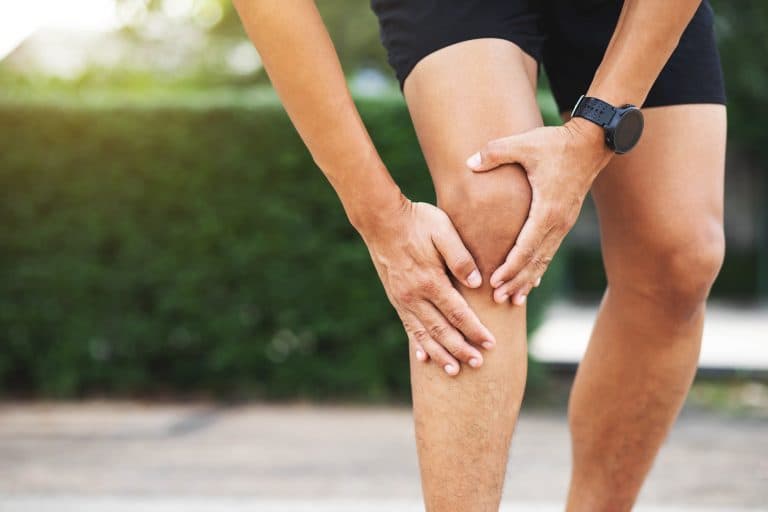
In the first few days after a Lipogems knee procedure, recovery is usually local rather than dramatic. The official Lipogems aftercare page says mild to moderate swelling or local inflammation may occur for a few days at the knee injection site and/or the fat-harvest site. That matters because this is not just a knee injection: there is also a small fat-harvest step, so soreness can come from more than one area.
The common early nuisances are the sort of things expected after a minor procedure: aching around the harvest area, some swelling near the knee, and bruising, especially where the fat was taken. Lipogems’ own aftercare material also notes that a compression garment may be used for a few days after the harvest, which reflects the fact that the recovery picture often depends as much on the donor site as on the joint itself.
A 110-knee observational study of microfragmented adipose tissue reported no adverse events during the intraoperative, recovery or postoperative periods, which is reassuring, but it does not provide a precise day-by-day diary. So the most realistic early expectation is a short spell of local swelling, tenderness or bruising, rather than a fixed timeline with exact milestones for day 1, day 3 or week 1.
When improvement tends to show up
The more useful time marker for Lipogems is month 6, not week 1. Early soreness after the procedure and later symptom benefit are not the same thing. The first belongs to the injection and harvest itself; the second, if it happens, is usually the slower change measured in pain and function scores over several months.
In a prospective 2-year cohort, VAS pain had already fallen by 6 months. In that same study, KOOS improved by 6 months and then improved again between 6 and 12 months, suggesting that progress, when it occurs, may continue after the early recovery period rather than arriving as one sudden turning point. By 12 months, a separate 110-knee observational study also reported better pain and function, with median VAS improving from 70 to 30 and median Oxford Knee Score from 25 to 33.5 after a single MFAT injection.
Taken together, the published pattern is a gradual curve: some patients may notice change building across the first few months, while others may only see a clearer difference by the 6-month review. That is why post-procedure swelling in the first few days should not be confused with whether the treatment is helping.
Why recovery is not the same for everyone
Variation often reflects where the body reacts most. Because Lipogems includes a fat harvest as well as a knee injection, one person may mainly notice bruising or tenderness around the donor area for a few days, while another feels more irritation in the knee itself. The official aftercare material refers to both the injection site and the harvest site, which helps explain why early recovery is not identical from patient to patient even when the same technique is used.
A separate reason is the condition of the joint before treatment. In a prospective 2-year cohort, patients with Kellgren-Lawrence grade IV osteoarthritis showed less improvement at 24 months than those with less advanced disease. That does not make advanced arthritis an automatic exclusion, but it does justify more cautious expectations. MFAT may support pain and function in some knees, yet in established severe osteoarthritis the benefit may be smaller or fade sooner, and it should not be presented as cartilage regrowth or a reversal of longstanding wear.
Next steps
Where to go from here
These routes are selected from the topic and purpose of this article. They are guidance, not a diagnosis or treatment recommendation.
Recovery route
Explore MFAT recovery
Talk to the team
Book a free discovery call
What the safety data actually show
Across the published knee osteoarthritis series, the clearest safety point is straightforward: serious complications were not a prominent finding in the small cohorts retrieved. In an observational study of 110 knees, no adverse events were reported during the intraoperative, recovery, or postoperative periods after a single ultrasound-guided intra-articular MFAT injection. An earlier Lipogems cohort indexed on PubMed also reported no serious adverse events, while noting improvements in pain, function and quality of life over at least 12 months.
That does not mean the procedure is entirely event-free. The official Lipogems aftercare material says mild to moderate swelling or local inflammation may occur for a few days, and bruising can occur after the procedure; some patients are also given a compression garment for a few days. In practical terms, those short-term local effects are the main near-term issues described in the material retrieved here.
The important qualifier is about study design. Most of the knee evidence available here comes from observational cohorts, not large randomised trials built to capture uncommon complications in detail. So the bottom line is simple: the published knee data are supportive on safety, but they are still based mainly on cohort evidence rather than high-quality comparative recovery studies.
Questions the evidence does not answer well
The practical unknowns are quite specific. In the knee studies cited here, outcomes were mainly reported at 6, 12 and 24 months, not as a week-by-week recovery diary, so several common questions remain only partly answered in the published evidence.
- Work: there is little study-level detail on return to desk work versus manual labour.
- Sport: the papers do not map a clear return to gym work, running or pivoting sport by week 2, week 4 or week 6.
- Medicines: advice on painkillers or anti-inflammatory restrictions was not set out consistently in the retrieved cohorts.
- Aftercare routine: some of the clearest short-term instructions come instead from the official Lipogems aftercare material, which mentions a few days of swelling or local inflammation, possible bruising, and sometimes a compression garment for a few days.
That gap has a useful consequence. When a clinic gives tailored instructions on walking, exercise progression, wound care or medication use after Lipogems, those instructions are not an optional extra; they are part of the procedure because the trials do not provide one standard protocol that fits every patient. In practice, different teams may use slightly different aftercare pathways, and that variation reflects the limits of the evidence as much as individual clinical judgement.
Who needs a more tailored recovery discussion
Some people need more than a standard recovery outline. In the 2-year MFAT cohort, patients with Kellgren-Lawrence grade IV knee osteoarthritis had less improvement by 24 months than those with less severe disease, so anyone with advanced OA should discuss not just whether symptoms may improve, but how durable that improvement is likely to be. The same applies to people whose week depends on kneeling, lifting, stairs or sport: because Lipogems involves both a fat harvest and a joint injection, the practical recovery burden may matter as much as the hoped-for benefit.
A proper specialist discussion should therefore cover candidacy, the likely pace of improvement, any aftercare restrictions, and what counts as a realistic goal for that knee rather than an idealised one. For patients seeking that assessment in London, London Cartilage Clinic, Harley Street, offers consultation booking via londoncartilage.com.
Frequently Asked Questions
- Mild to moderate swelling, local inflammation, tenderness and bruising are the usual early effects for a few days. Because Lipogems includes a fat-harvest step, soreness may come from both the knee and the donor site.
- Published studies suggest improvement, if it happens, is gradual over several months rather than days. Changes are often clearer by 6 months, and some studies show further gains by 12 months.
- No. Recovery varies depending on whether the harvest site or knee reacts more, and on how advanced the osteoarthritis is. London Cartilage Clinic would tailor advice after assessment with Prof Paul Lee.
- The published knee studies retrieved here did not report serious adverse events in the small cohorts reviewed. Short-term swelling and bruising remain the main near-term effects described in the aftercare material.
- People with advanced osteoarthritis, or those whose work or sport depends on kneeling, lifting, stairs or pivoting, should have a tailored plan. London Cartilage Clinic can assess suitability and aftercare with Prof Paul Lee.
Next steps
Where to go from here
These routes are selected from the topic and purpose of this article. They are guidance, not a diagnosis or treatment recommendation.
Recovery route
Explore MFAT recovery
Continue with practical recovery and patient-journey information.
Talk to the team
Book a free discovery call
A non-medical call with the team to understand services and choose the right booking route.
Legal & Medical Disclaimer
This article is published by London Cartilage Clinic for general information and education only. It does not constitute medical advice, diagnosis, or treatment.
Always seek personalised advice from a qualified healthcare professional before making decisions about your health. London Cartilage Clinic accepts no responsibility for errors, omissions, third-party content, or any loss, damage, or injury arising from reliance on this material.
If you believe this article contains inaccurate or infringing content, please contact us at [email protected].


