








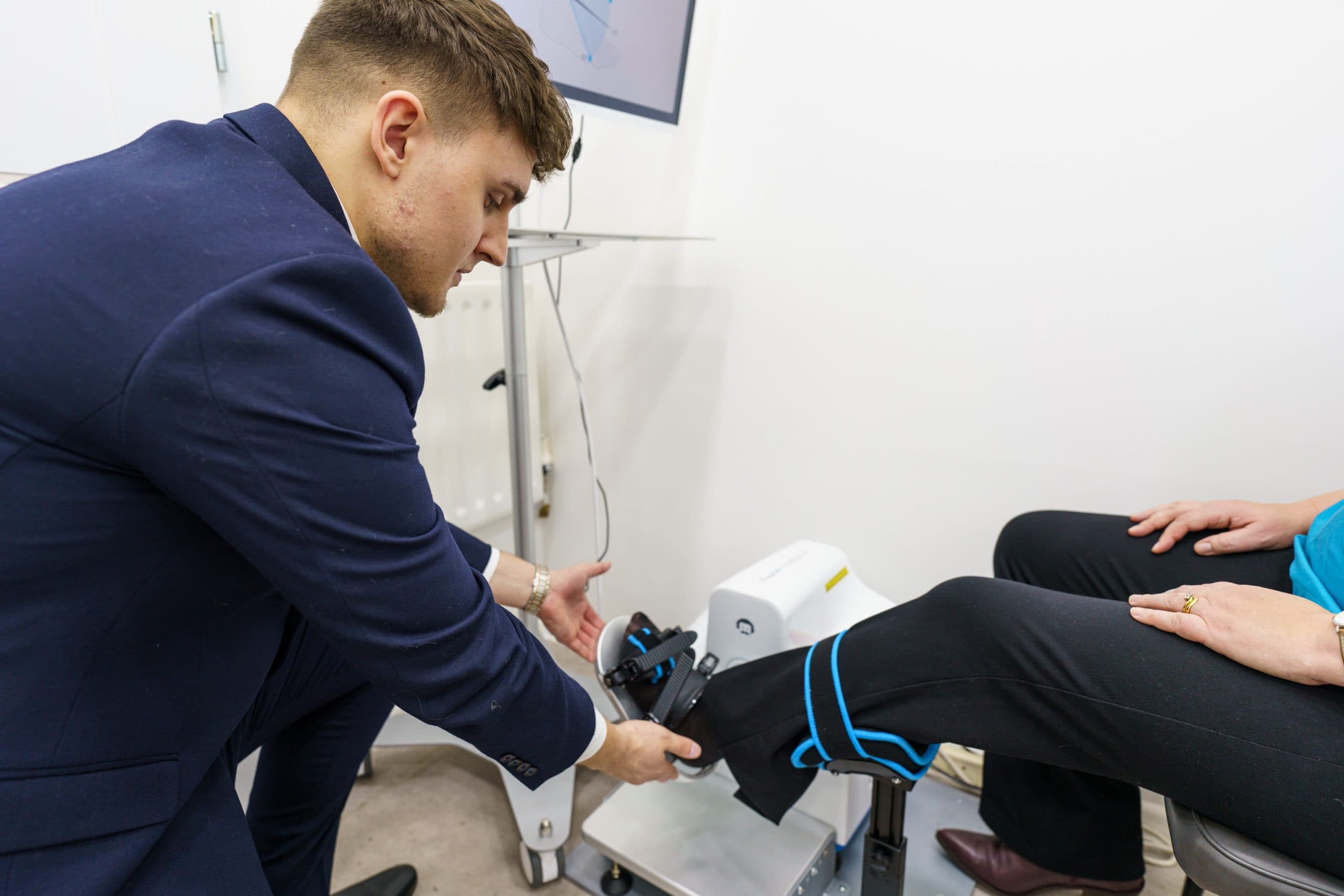
Clinician checking leg positioning device in treatment room

ACL Repair

From £9,800
View Price List

Guide price only. Final cost is confirmed after assessment.

At London Cartilage Clinic we provide ACL (Anterior Cruciate Ligament) repair surgery using either a BioBrace implant or STARR technique. Each method is designed to enhance the natural healing of your ACL, providing options that maintain the original anatomy of your knee. ACL repair can be a good alternative to reconstruction surgery in certain cases. Using implants for knee ligament repair is a new and innovative type of treatment that has already proven to deliver impressive results for patients. Find out more about ACL repair as a treatment option for you by booking a consultation with one of our specialists.

Surgeon holding a knee implant model

Is ACL repair right for you? Candidate selection matters

ACL repair aims to preserve your native ligament and support biological healing, rather than replacing it with a graft in every case.

  • BioBrace: reinforced scaffold that shares load while healing progresses.
  • STARR: advanced repair approach designed to improve fixation and tissue recovery.

These techniques are usually considered for selected tear patterns (often proximal) and are confirmed after MRI and specialist examination.

  • Adults with complete ACL rupture and suitable tissue quality.
  • Patients prioritising preservation of native knee anatomy.
  • Athletes and active individuals with clear return-to-sport goals.

Why patients choose modern ACL repair

For suitable candidates, ACL repair can reduce surgical trauma while maintaining proprioceptive fibres and natural knee biomechanics.

  • Potentially faster early recovery than full reconstruction in selected cases.
  • Preservation of native ligament anatomy and knee feel.
  • Lower donor-site morbidity because graft harvest may be avoided.
  • Reconstruction remains available later if clinically required.

London Cartilage Clinic provides advanced imaging-led planning, high-volume specialist surgery, and staged rehabilitation support to maximise functional recovery.

Brace fitting session for lower-leg support
consulting-in-office-with-pen

Frequently Asked Questions

What is the BioBrace implant?

The BioBrace is another method used in ACL surgical repair to strengthen the ligament and optimise healing. BioBrace is a reinforced bioinductive implant that is comprised of both synthetic and biological materials. Its unique properties allow it to share the load and support the ligament throughout the healing process.

It does this using its highly porous collagen scaffold and microfilaments to reinforce it. The clever design and structure of the BioBrace enables regeneration of blood vessels and fibroblasts into the scaffold to naturally integrate with the tissue surrounding it.

ACL repair vs reconstruction: Which is better?

ACL repair and ACL reconstruction are distinct approaches to treating ACL injuries. While both aim to restore knee stability and function, they differ significantly in technique, recovery, and long-term effects on the knee joint.

ACL Repair: Focuses on suturing the original ligament, preserving as much of the natural tissue as possible. Ideal for patients with specific types of ligament tears and those seeking quicker recovery times.

ACL Reconstruction: Involves replacing the damaged ligament with a graft, typically taken from another tendon in the body. This is often recommended for complete tears or when the ligament is severely damaged.

A key benefit of repair techniques such as BioBrace and STARR is the reduced healing time for some individuals in comparison to ACL reconstruction. Also, repair techniques promote more natural self-healing. However, ACL reconstruction still has a higher success rate compared to repair, which is more important to some patients despite the longer recovery time.

Who is eligible for ACL repair?

To be a good candidate for ACL repair using the BioBrace implant or STARR you need to be an adult with a complete rupture of the ACL that has been confirmed by an MRI. Like with reconstruction surgery, ACL repair is a common option adults who have injured their knee during sports.

A detailed assessment with our specialists, including imaging and physical exams, will determine the best approach for your specific condition.

What is the recovery time for BioBrace and STARR ACL repairs?

Recovery varies by individual but typically is quicker than reconstruction, with many patients resuming light activities within weeks.

What are the risks associated with ACL repair techniques?

Risks are minimal and significantly lower than those associated with traditional reconstruction, especially when it comes to long-term joint health.

Can ACL repair be converted to reconstruction if needed?

Yes, in the rare event that ACL repair does not achieve the desired outcome, conversion to reconstruction is a viable option.

Still have more specific concerns?

Free Discovery Call

London Cartilage Clinic

Latest Insights

Clinical updates, cartilage treatment guidance, and recovery-focused articles from our specialist team.

Nutrition Strategies for Strengthening Knee Cartilage
John Davies

Nutrition Strategies for Strengthening Knee Cartilage

Discover how nutrition supports knee cartilage health, as explained by Professor Paul Lee of the London Cartilage Clinic. Learn which foods—like fatty fish, turmeric, and vitamin C-rich fruits—can strengthen cartilage and reduce inflammation. Avoid processed sugars and trans fats that harm joints. Practical meal tips help incorporate these nutrients into daily life. While diet aids joint comfort and resilience, it works best combined with exercise and medical advice. Embrace balanced eating and expert guidance for healthier, more comfortable knees.

ChondroFiller Minimally Invasive Cartilage Repair Benefits and Patient Suitability
John Davies

ChondroFiller Minimally Invasive Cartilage Repair Benefits and Patient Suitability

ChondroFiller is a minimally invasive, keyhole surgery technique that repairs cartilage damage by injecting a collagen gel directly into the affected area. Suitable for patients with small to medium cartilage lesions, it promotes natural cartilage regeneration with less pain and faster recovery compared to traditional surgeries. The procedure involves arthroscopic guidance for precise gel placement, minimizing tissue damage and complications. Clinical studies report high patient satisfaction, improved joint function, and lasting benefits. Recovery typically includes tailored rehabilitation with reduced pain and a quicker return to activity. ChondroFiller offers a safe, effective alternative for cartilage repair, emphasizing simplicity and rapid healing. Consultation with healthcare professionals is essential to determine candidacy and ensure optimal outcomes.

The Link Between Segond Fracture and ACL Tears in Diagnosis and Treatment
John Davies

The Link Between Segond Fracture and ACL Tears in Diagnosis and Treatment

Explore the critical connection between Segond fractures and anterior cruciate ligament (ACL) tears, common yet often intertwined knee injuries especially among athletes. This article highlights how the Segond fracture—a small tibial bone break—serves as a key indicator of ACL damage. Advances in MRI and CT imaging aid in early and accurate diagnosis, leading to more comprehensive treatment strategies that address both bone and ligament injuries. Understanding this relationship improves patient outcomes, enhancing knee stability and function. Future research aims to refine detection and develop minimally invasive surgical techniques, helping patients recover faster and return to active lifestyles confidently.