






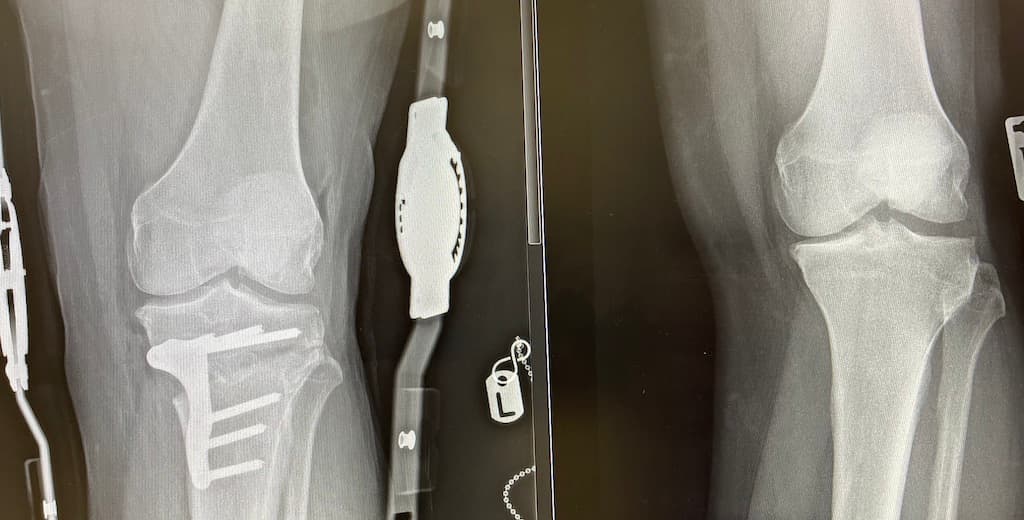
Post-operative knee X-ray with fixation plate

Osteotomy

From £18,500
View Price List

Guide price only. Final cost is confirmed after assessment.

An osteotomy is a surgery that cuts away slivers of bone in order to reshape them. It can also be used to shorten or lengthen bones to fix related joint problems. Osteotomies are typically used to treat damaged joints and resolve dislocations through reduction. Osteotomy has the potential to be a complex surgical procedure. First, a skin incision will provide access to the bone, which is measured using special guide wires. The section of bone is then removed with a saw, leaving a space in the joint. This space is filled either with a bone graft or a metal plate that holds the two bones ends together to heal.

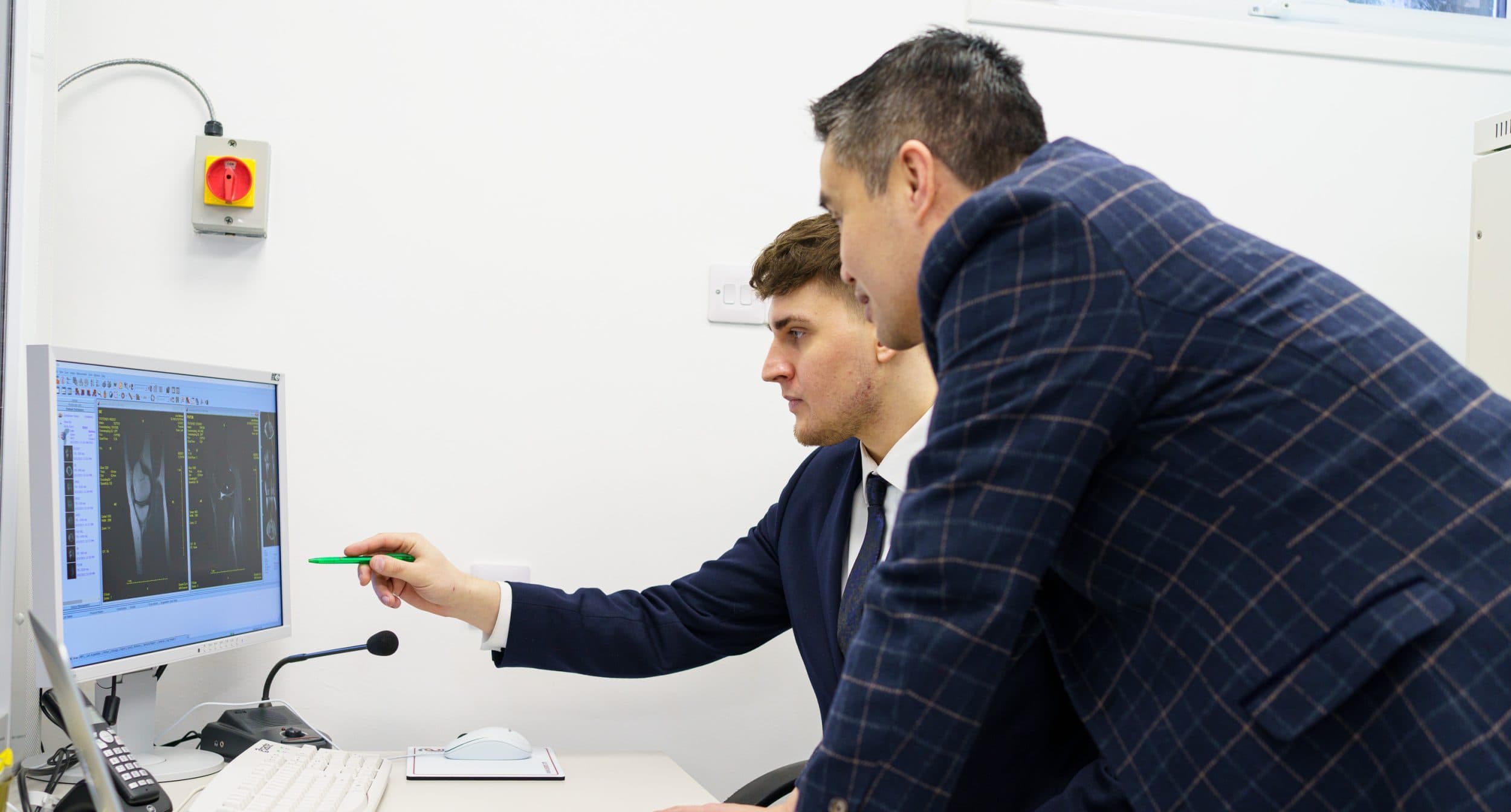
Two clinicians reviewing MRI images together

Why an osteotomy may be recommended

Osteotomy reshapes bone alignment to redistribute load across the joint. It is often considered when malalignment is driving pain and cartilage overload.

  • Can reduce pressure on damaged cartilage compartments.
  • May delay progression of arthritis in selected patients.
  • Useful for improving mechanics before or alongside other procedures.

For active patients with focal wear and alignment issues, osteotomy can be a joint-preserving alternative to early replacement.

The London Cartilage Clinic osteotomy advantage

Osteotomy outcomes depend on precise correction planning and disciplined rehabilitation. At London Cartilage Clinic, we use specialist imaging and alignment analysis to define the exact target.

  • Procedure type is selected for your specific deformity and symptoms.
  • Fixation strategy and recovery plan are individualised.
  • Rehab milestones are monitored to protect correction and restore function.

Our aim is durable alignment correction, reduced pain, and confident return to normal activity with lower risk of future overload.

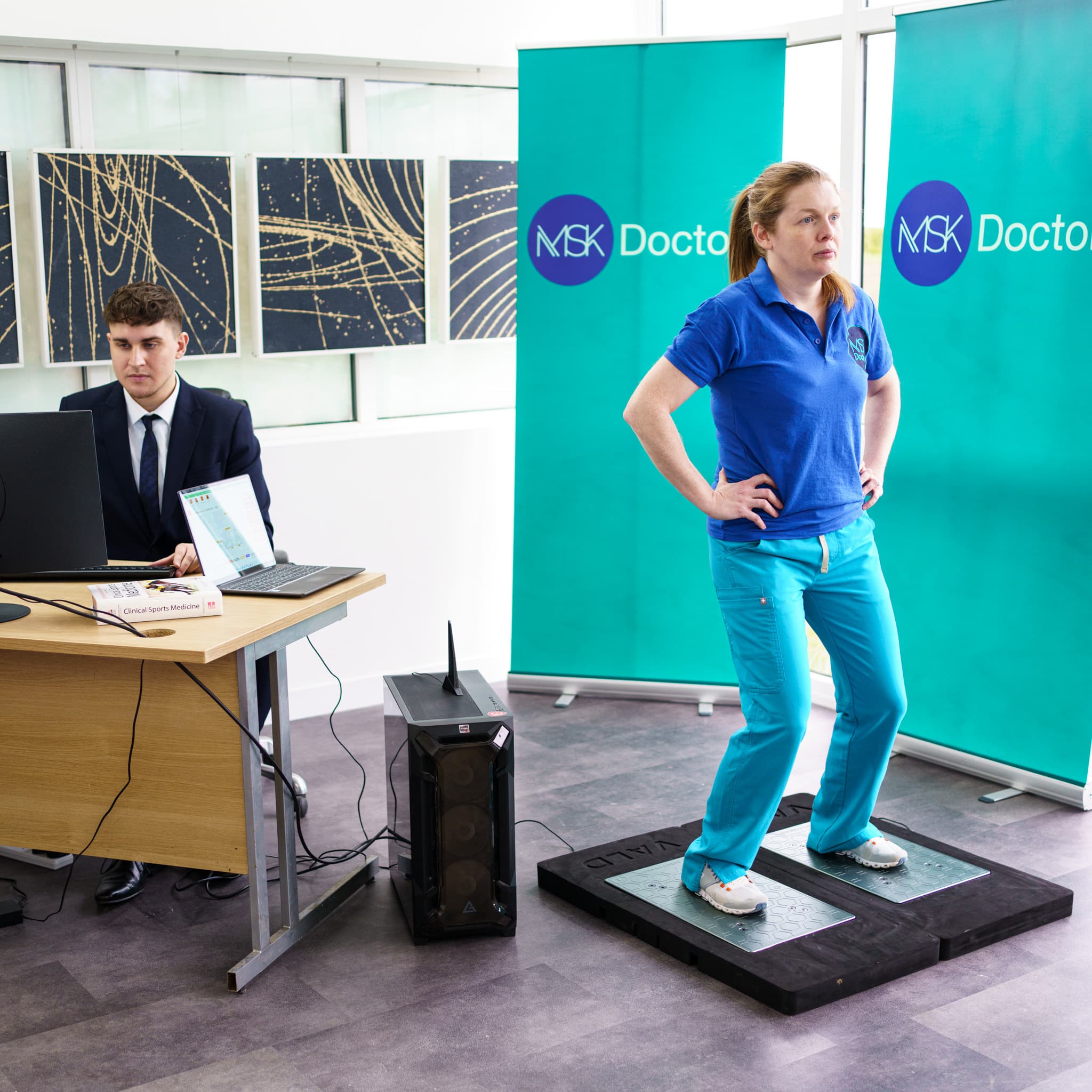
Balance platform gait assessment in clinic
consulting-in-office-with-pen

Frequently Asked Questions

Who can get an osteotomy?

Osteotomies are not only reserved for people who are old or suffering from an affliction. Anyone can suffer an injury or develop a condition that causes weakness in a crucial bodily joint. As such, anyone can have an osteotomy to resolve joint pain and restore joint stability.

What are the risks of osteotomy?

Osteotomies can be considered a major surgery. This is because the range of osteotomies that can be performed each come with risks that are unique to that procedure. Common risks of an osteotomy can be blood clots, infection, nerve damage, scar tissue. Your surgeon will discuss all the risks of the procedure beforehand.

How long does it take to recover from osteotomy?

Patients who have undergone a knee osteotomy will typically be back walking again after 8-12 weeks, although it can take as long as six months to make a full recovery. This will depend on factors such as patient health, age, and the severity of the joint damage that needed treating. Certain osteotomy surgeries will have longer recovery periods associated with them as well.

Still have more specific concerns?

Free Discovery Call

London Cartilage Clinic

Latest Insights

Clinical updates, cartilage treatment guidance, and recovery-focused articles from our specialist team.

ChondroFiller Innovations in Cartilage Repair Compared to Traditional Methods
Eleanor Hayes

ChondroFiller Innovations in Cartilage Repair Compared to Traditional Methods

Cartilage injuries pose significant challenges due to poor natural healing, with traditional treatments like debridement and microfracture often yielding limited long-term success. ChondroFiller, a novel biocompatible collagen matrix, offers a minimally invasive alternative that supports natural cartilage regeneration. Studies demonstrate its effective integration and maturation of repaired tissue, with applications extending beyond the knee to the hip joint. Compared to hyaluronic acid injections, which provide symptomatic relief without promoting tissue growth, ChondroFiller may offer more durable repair for suitable cases. Expert consultation is crucial to tailor treatments based on individual patient needs and damage extent. Emerging clinical evidence positions ChondroFiller as a promising advancement in cartilage repair, potentially improving recovery times and outcomes.

Arthrosamid Treatment for Morning Stiffness in Knee Osteoarthritis
Eleanor Hayes

Arthrosamid Treatment for Morning Stiffness in Knee Osteoarthritis

Morning stiffness in stiffness-dominant knee osteoarthritis (OA) significantly impairs mobility and daily activities. Arthrosamid, a novel injectable treatment, enhances joint lubrication and flexibility, targeting the mechanical causes of stiffness, especially after rest. Led by expert orthopaedic surgeon Professor Paul Lee at the London Cartilage Clinic, this therapy offers promising relief for those struggling with painful morning joint stiffness. By improving ease of movement, Arthrosamid may help patients regain confidence and improve their quality of life. Individuals should consult healthcare professionals to explore personalized treatment options.

The Cartledge Approach to Advanced Knee Cartilage Repair
Eleanor Hayes

The Cartledge Approach to Advanced Knee Cartilage Repair

The Cartledge approach revolutionizes knee cartilage repair by integrating biomechanics and regenerative medicine, targeting both tissue regrowth and mechanical function. This method tailors treatments based on individual joint forces, promoting the formation of durable, resilient cartilage. Supported by clinical studies, it offers improved pain relief, mobility, and longer-lasting results compared to traditional therapies. Personalized rehabilitation guided by biomechanical insights may accelerate recovery and reduce re-injury risks. Despite challenges in implementation, the Cartledge approach represents a promising future for treating knee cartilage damage, enhancing patient outcomes and quality of life through multidisciplinary innovation.