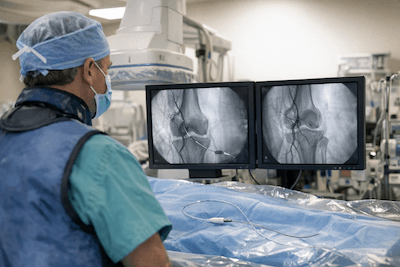
Fluoroscopy-guided catheter procedure

Genicular Artery Embolisation

Genicular artery embolisation (GAE) is a minimally invasive, catheter-based procedure that targets the abnormal blood vessels contributing to chronic knee pain in osteoarthritis. Performed by an interventional radiologist under local anaesthetic, GAE offers a non-surgical option for patients who want to reduce pain and improve function without joint replacement. The procedure is a day case with no incisions and a rapid return to daily activity.

Specialist performing image-guided procedure

How genicular artery embolisation works

In an osteoarthritic knee, abnormal new blood vessels (neovascularisation) develop in the joint lining and surrounding tissues. These vessels carry sensory nerve fibres that amplify pain signals. GAE selectively blocks these vessels to reduce inflammation at its source.

  • A thin catheter is guided through an artery to reach the vessels around the knee.
  • Microscopic particles are released to block the abnormal blood supply.
  • The procedure is monitored with live fluoroscopic imaging throughout.

GAE targets the inflammation driving your knee pain rather than masking symptoms. It does not damage cartilage, bone, or healthy tissue, and it preserves all future treatment options including joint replacement.


What to expect from the procedure

GAE is performed as a day case. The procedure typically takes around one hour and requires only a small puncture site rather than a surgical incision.

  • Local anaesthetic with optional light sedation for comfort.
  • No stitches, no crutches, and no overnight hospital stay.
  • Most patients return to routine activities within days.

Pain improvement typically builds over weeks as the inflammatory response settles. GAE can be combined with other treatments such as physiotherapy or injections as part of a broader management plan.

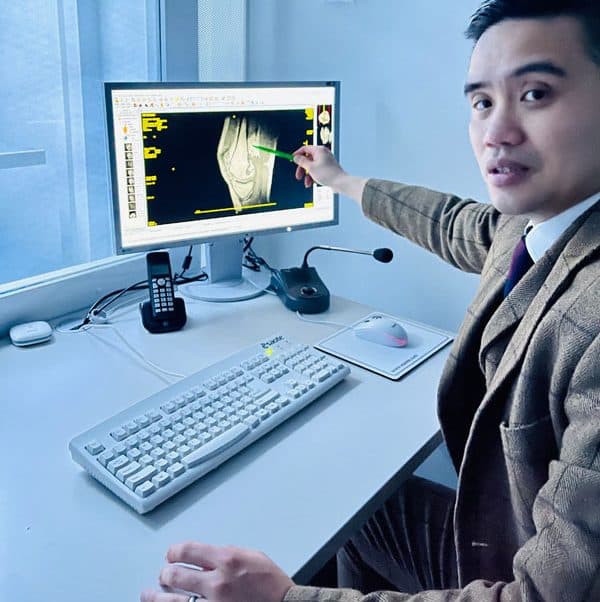
Specialist reviewing knee imaging on screen

You may have more options than you think

Most patients have more treatment options than they have been told

At London Cartilage Clinic we follow a structured clinical framework across four areas of treatment. Before recommending a single procedure, we assess which combination of approaches gives you the best outcome.

Preserve

Protect what you have. Slow degeneration and manage symptoms.

Repair

Fix specific damage. Torn tissue, unstable joints, structural problems.

Regenerate

Rebuild lost tissue. Biological treatments that stimulate new growth.

Replace

When other options are exhausted. Joint replacement as a last resort.

Explore the full range of treatments available for your joint. Each hub page shows every option we offer, organised by clinical approach.

consulting-in-office-with-pen

Frequently Asked Questions

How does genicular artery embolisation reduce knee pain?

In osteoarthritis, new abnormal blood vessels grow around the knee joint and carry nerve fibres that signal pain. GAE blocks these tiny vessels using microscopic particles delivered through a catheter. By reducing the abnormal blood supply, the procedure decreases inflammation and the associated pain signals.

Is GAE performed under general anaesthetic?

No. The procedure is carried out under local anaesthetic with mild sedation if needed. A small puncture is made in the wrist or groin to access the arterial system, and the entire procedure is guided by real-time imaging. Most patients go home the same day.

Who is a good candidate for genicular artery embolisation?

GAE is typically suited to patients with moderate to severe knee osteoarthritis who experience persistent pain despite conservative treatments such as physiotherapy, anti-inflammatory medication, and injections, but who wish to avoid or delay knee replacement surgery.

What is the recovery time after GAE?

Most patients can resume normal activities within a few days. There may be mild bruising or discomfort at the catheter access site. Pain relief from the procedure typically develops over the following weeks as inflammation subsides.

How long do the results of GAE last?

Published studies show that many patients experience significant pain reduction lasting 12 months or longer. The procedure can be repeated if needed, and it does not affect eligibility for future knee replacement should that become necessary.

Still have more specific concerns?

Free Discovery Call

London Cartilage Clinic

Latest Insights

Clinical updates, cartilage treatment guidance, and recovery-focused articles from our specialist team.

Sinogel Injection Recovery Timeline and Aftercare Tips
Injection
Eleanor Hayes

Sinogel Injection Recovery Timeline and Aftercare Tips

Sinogel injections offer an effective, non-surgical treatment for knee osteoarthritis pain, helping improve joint mobility and reduce discomfort. Post-injection, mild swelling and soreness are common but usually subside within days. Most patients notice gradual improvement between four to eight weeks, supported by gentle activity and personalized aftercare. Avoid high-impact exercises early on, and monitor for any signs of complications like increased redness or fever. Expert guidance from professionals like Professor Paul Lee at the London Cartilage Clinic ensures a safe recovery tailored to your needs. Maintaining a healthy lifestyle, staying hydrated, and attending follow-ups enhance healing. This comprehensive overview provides clear expectations and recovery tips to help patients maximize Sinogel treatment benefits while promoting joint health.

Arthrosamid Treatment Benefits for Patellofemoral Knee Osteoarthritis
Eleanor Hayes

Arthrosamid Treatment Benefits for Patellofemoral Knee Osteoarthritis

Patellofemoral osteoarthritis is a painful knee condition affecting the joint between the kneecap and thigh bone, often limiting daily activities like climbing stairs and cycling. Traditional treatments, including physiotherapy and medication, may not restore lost cartilage cushioning. Arthrosamid, an injectable gel mimicking cartilage, offers a promising minimally invasive option to reduce pain and improve movement. Recent studies show Arthrosamid can provide symptom relief for up to 24 months, especially in selected patients, though results vary and further research is needed. Expert care at the London Cartilage Clinic ensures personalized treatment plans under specialist guidance. Consult healthcare professionals to determine if Arthrosamid is suitable for managing patellofemoral osteoarthritis and enhancing quality of life.

Supplements and Vitamins Supporting Knee Cartilage Health
Eleanor Hayes

Supplements and Vitamins Supporting Knee Cartilage Health

Knee cartilage damage can cause pain and movement difficulties, affecting quality of life. This article explores key supplements like glucosamine, chondroitin sulfate, and collagen, detailing their potential benefits, recommended dosages, and safety. It also discusses essential vitamins such as D and C that support cartilage health. While some supplements may alleviate symptoms and support joint function, evidence for cartilage repair is limited, and personalized medical advice is crucial. Emerging treatments, including cell-based therapies, show promise but remain experimental. Combining supplements with lifestyle changes and professional guidance offers the best approach to managing knee cartilage health.

Privacy & Cookies Policy