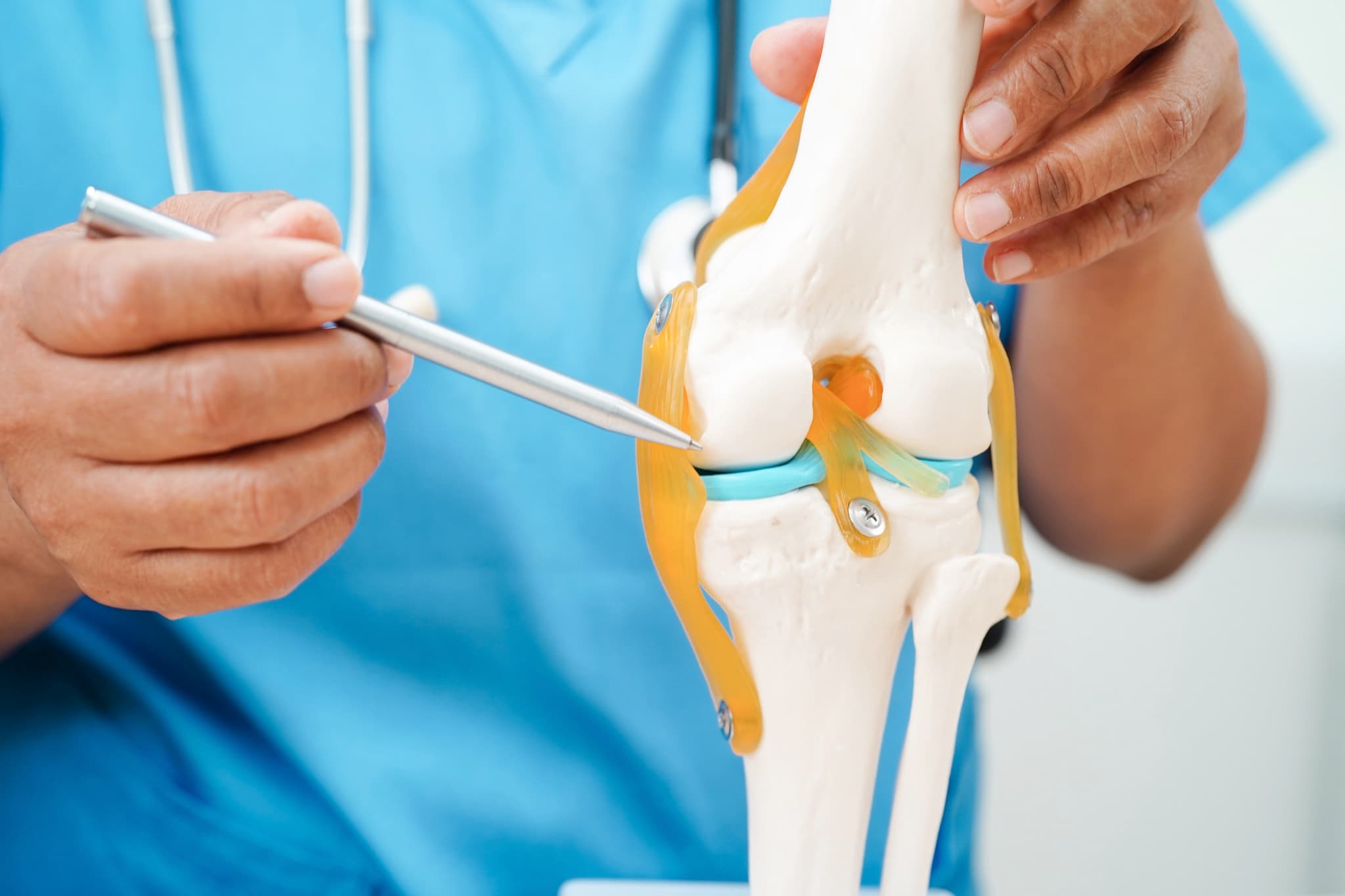
Doctor demonstrating knee joint model during consultation

Knee Replacement

From £18,500
View Price List

Guide price only. Final cost is confirmed after assessment.

Knee replacement surgery resurfaces the worn joint surfaces with precision-engineered implants to restore movement and relieve pain. At London Cartilage Clinic, we offer both total and partial knee replacement, selected based on the pattern and extent of your arthritis. Every patient receives a thorough assessment of joint-preserving alternatives before replacement is recommended, because we believe surgery should be the right choice, not the only option offered.

Doctor examining patient knee during pre-operative assessment

Total vs partial choosing the right replacement

The choice between total and partial knee replacement depends on where the arthritis is, how much healthy tissue remains, and your functional goals.

  • Total replacement: all three compartments are resurfaced. Suited to widespread arthritis affecting the entire joint.
  • Partial replacement: only the damaged compartment is replaced. Preserves ligaments and more natural knee feel.

Patient-specific imaging and templating allow us to plan implant size, positioning, and alignment before you reach the operating theatre. This precision supports better function and longer implant survival.


Recovery and return to the things you enjoy

Knee replacement recovery follows a structured pathway. Physiotherapy begins on the day of surgery and continues for several months to rebuild strength, flexibility, and confidence in the joint.

  • Walking with support from day one, typically home within one to three days.
  • Most patients return to driving at around six weeks.
  • Recreational activities such as cycling, swimming, and golf from three months.

Our post-operative programme focuses on functional milestones rather than arbitrary timelines. The pace is guided by your progress, not by a calendar.

Patient returned to golf after knee replacement

You may have more options than you think

Most patients have more treatment options than they have been told

At London Cartilage Clinic we follow a structured clinical framework across four areas of treatment. Before recommending a single procedure, we assess which combination of approaches gives you the best outcome.

Preserve

Protect what you have. Slow degeneration and manage symptoms.

Repair

Fix specific damage. Torn tissue, unstable joints, structural problems.

Regenerate

Rebuild lost tissue. Biological treatments that stimulate new growth.

Replace

When other options are exhausted. Joint replacement as a last resort.

Explore the full range of treatments available for your joint. Each hub page shows every option we offer, organised by clinical approach.

consulting-in-office-with-pen

Frequently Asked Questions

What is the difference between total and partial knee replacement?

Total knee replacement resurfaces all three compartments of the knee joint. Partial (unicompartmental) replacement resurfaces only the damaged compartment, preserving healthy bone, cartilage, and ligaments. Partial replacement is suited to patients where arthritis is confined to one area of the knee and the ligaments remain intact.

How long does a knee replacement last?

Modern implants are designed to last 15 to 25 years or longer. Longevity depends on implant type, surgical technique, patient activity level, and body weight. At London Cartilage Clinic, patient-specific planning is used to optimise implant positioning and maximise lifespan.

How long is the recovery from knee replacement?

Most patients are walking with support on the day of surgery and leave hospital within one to three days. Driving typically resumes at around six weeks. Full recovery with a return to recreational activities takes three to six months, though improvement continues for up to a year.

Why does London Cartilage Clinic explore alternatives before recommending replacement?

Knee replacement is a highly effective procedure, but it is irreversible. Many patients have biological and joint-preserving options that can delay or avoid the need for replacement entirely. Our approach is to exhaust these alternatives first and recommend replacement only when it offers a clear advantage over continued conservative management.

What activities can I do after knee replacement?

Most patients return to walking, cycling, swimming, golf, and gentle hiking. High-impact activities such as running and jumping place greater stress on the implant and are generally discouraged. Your surgeon will discuss activity goals as part of your pre-operative planning.

Still have more specific concerns?

Free Discovery Call

London Cartilage Clinic

Latest Insights

Clinical updates, cartilage treatment guidance, and recovery-focused articles from our specialist team.

Home Remedies and Care for Women with Left Hip Pain
Eleanor Hayes

Home Remedies and Care for Women with Left Hip Pain

Discover safe, non-surgical methods to relieve left hip pain in women with expert advice from Professor Paul Lee and the London Cartilage Clinic. This article explains common causes such as muscle strain, hormonal changes, and developmental issues, alongside practical home remedies including gentle stretches, heat and cold therapy, and lifestyle adjustments. Learn when to seek professional help and how symptom tracking can aid diagnosis and treatment. Empower your recovery and improve mobility with effective, evidence-based tips for managing left hip pain at home.

ChondroFiller for Effective Cartilage Regeneration
Eleanor Hayes

ChondroFiller for Effective Cartilage Regeneration

ChondroFiller is an innovative collagen-based treatment designed to support natural cartilage repair by providing a biodegradable scaffold for the body's own cells to regenerate damaged tissue. This acellular, type I collagen gel encourages growth of essential type II cartilage, promoting effective healing without introducing foreign cells or drugs. Clinical studies demonstrate ChondroFiller's safety, biocompatibility, and significant improvements in pain relief and joint function. For optimal outcomes, treatment should be managed by experienced specialists like Professor Paul Lee at the London Cartilage Clinic, who combine advanced therapies with personalized rehabilitation. ChondroFiller offers a promising option for patients with small to medium cartilage defects, enhancing mobility and quality of life through natural regeneration.

Knee Cartilage Replacement Gels for Osteoarthritis Relief
Knee
Eleanor Hayes

Knee Cartilage Replacement Gels for Osteoarthritis Relief

Knee cartilage replacement gels, including hyaluronic acid and collagen-based injections, offer a non-surgical treatment option for mild to moderate osteoarthritis. These gels mimic natural joint lubrication and cushioning, reducing pain and improving mobility by decreasing friction and absorbing shocks. While they do not regenerate cartilage, clinical studies show symptom relief lasting several months to a year. Precise injection techniques enhance effectiveness, and patient selection is crucial for optimal outcomes. Typically well-tolerated, the injection procedure involves minimal discomfort and manageable aftercare. Clinics like the London Cartilage Clinic provide expert assessments to tailor treatment plans and set realistic expectations. Patients should consult healthcare professionals to determine suitability and receive personalized advice for managing osteoarthritis symptoms with cartilage gel injections.

Privacy & Cookies Policy