








Two operations, two philosophies
ACL repair vs
ACL reconstruction
STARR ACL repair preserves and regenerates your own torn ligament. Reconstruction removes it and substitutes a graft. The two operations differ in biology, recovery and — most importantly — in what they preserve for you long-term.
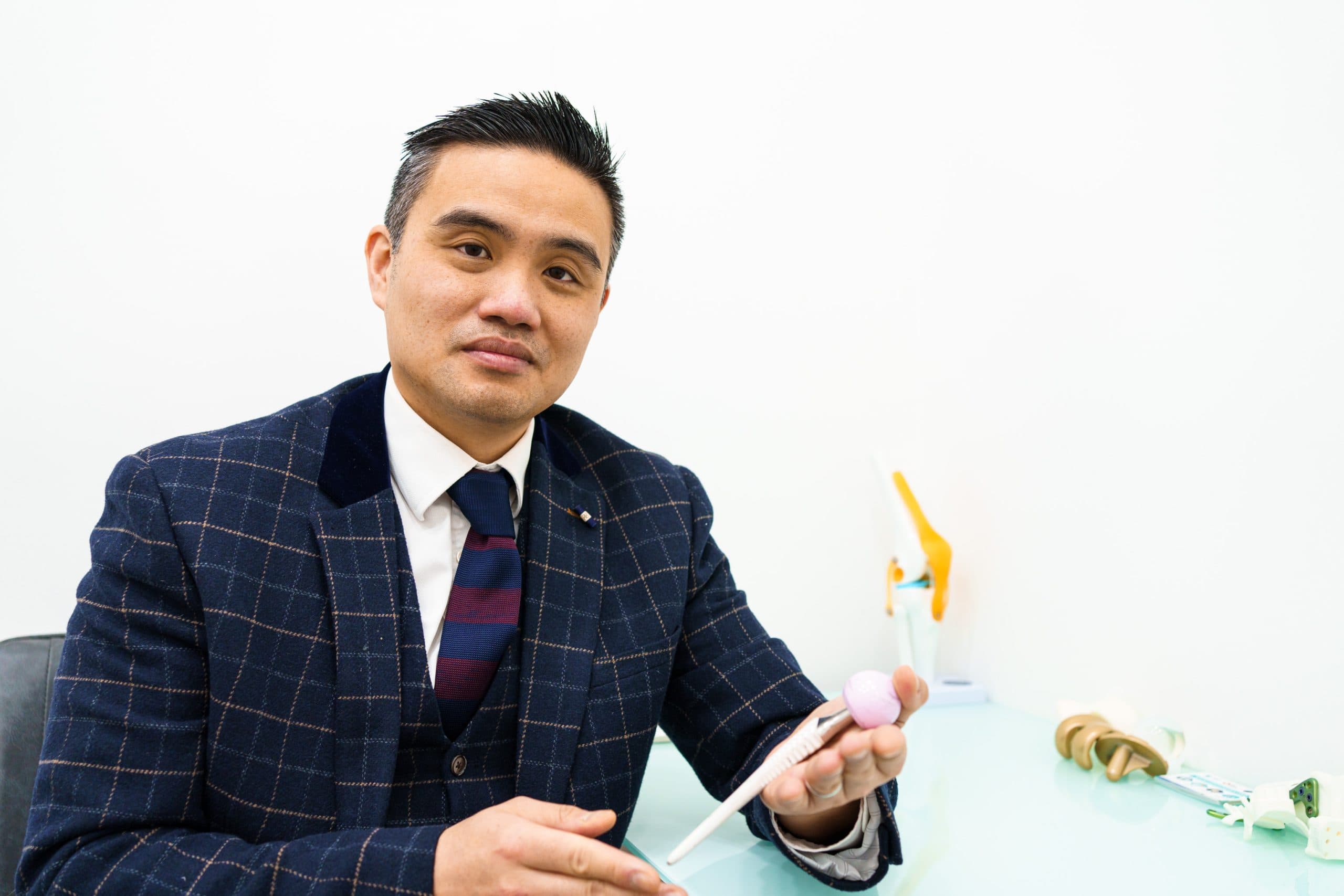
 Reviewed byProfessor Paul Lee MBBch, FRCS (Tr & Orth), PhDCartilage and joint preservation expertise
Quick Answer
ACL reconstruction removes the torn ligament and replaces it with a tendon graft. ACL repair (STARR or BioBrace) preserves the native ligament, braces it internally with high-strength suture tape, and supports biological healing with a regenerative scaffold. Choose repair when the native tissue is still viable (usually within 3 months of injury) and preserving proprioception matters; choose reconstruction when the window has closed, the tear pattern is unsuitable, or the higher success rate in the published literature is the priority.
Key facts
- Repair keeps the native ACL — no graft, no donor-site pain, proprioception preserved.
- Reconstruction removes the native ACL and substitutes a hamstring, patellar or quadriceps tendon graft.
- Timing: repair is only possible while the native tissue is viable — usually within the first 3 months.
- Evidence: reconstruction still has a higher overall success rate in the published literature; repair offers preservation advantages in suitable patients.
- If a repair does not achieve the desired outcome, conversion to reconstruction is a viable option later.
Two very different philosophies
Replace, or preserve?
Traditional ACL reconstruction has been the default for decades. It removes the torn ligament entirely and replaces it with a graft, usually taken from your own hamstring, patellar or quadriceps tendon. It is effective and well understood — but it discards the native ligament and the tissue harvested to rebuild it.
STARR — Suture-Tape Augmented Ruptured-ACL Repair — takes the opposite view: where the tissue is still viable, it preserves and regenerates your own ACL rather than replacing it. That difference in philosophy drives almost every other difference between the two operations, from what happens to your tendons to how the knee feels years later.
Side by side
What each operation actually does
What STARR preserves
The things you keep with a repair
Your own tendons
Because STARR repairs the native ligament, there is no graft harvest. Your hamstring, patellar and quadriceps tendons are left untouched, which avoids the donor-site pain and lasting strength deficits that some patients experience after a reconstruction.
Proprioception
The native ACL is rich in nerve endings that feed your brain’s sense of where the knee is in space — proprioception. Reconstruction cuts these out; preservation keeps them, which can help the knee feel more natural and responsive during sport. This is one of the most under-appreciated advantages of a repair-first approach.
Your own biology
STARR combines three things: an internal brace of ultra-strong suture tape for immediate mechanical stability, a bioengineered collagen scaffold that creates the right environment for healing, and the body’s own regenerative biology. Together they protect the repair while your own tissue rebuilds.
Future optionality
A repair does not burn the bridge to reconstruction. In the rare event that a STARR repair does not achieve the desired outcome, conversion to reconstruction is a viable option. The reverse — going back to your native ACL after it has been removed — is not possible.
The honest trade-off
Neither approach is universally better
The choice between STARR repair and ACL reconstruction depends on your tissue, your timeline and your goals — which is exactly what a specialist assessment is for. A key benefit of repair techniques such as BioBrace and STARR is the reduced healing time for some individuals in comparison to ACL reconstruction. Repair techniques also promote more natural self-healing.
However, ACL reconstruction still has a higher overall success rate compared to repair — and that is more important to some patients despite the longer recovery time. The right operation is the one that fits the specific tear, the time elapsed, and what you want from your knee for the next decade.
Not sure which applies to you?
Start with a 2-minute self-check
The ACL self-assessment estimates how likely a tear is and how much of your STARR window remains, so the conversation with the team starts from a shared understanding.
FAQ
Repair vs reconstruction — common questions
Is STARR suitable for everyone?
No. Eligibility depends on the quality of the native ligament and how recently you were injured. It can only be confirmed by Professor Lee after reviewing your MRI. The repair window page explains the timing thresholds.
What if a repair is no longer possible?
If the tissue has resorbed, Professor Lee can discuss a muscle-preserving allograft reconstruction that still avoids harvesting your own healthy tendons. See the ACL reconstruction page for the technique detail.
Is recovery faster after STARR than after reconstruction?
Recovery varies by individual but typically is quicker than reconstruction, with many patients resuming light activities within weeks. There is no donor-site pain to work through, which can make early rehabilitation more comfortable. See the recovery guide for the week-by-week picture.
Does ACL repair fail more often than reconstruction?
ACL reconstruction still has a higher overall success rate in the published literature than primary repair. The decision is therefore not “repair is better” in every case — it is about which approach fits your tissue, your timeline and your goals, including the proprioceptive and biological advantages of preservation when those matter to you.
Can a STARR repair be converted to a reconstruction later?
Yes. In the rare event that ACL repair does not achieve the desired outcome, conversion to reconstruction is a viable option.
Reviewed by
Professor Paul Y.F. Lee
MBBch · MRCS · MSc · PhD · FEBOT · FRCS (Tr & Orth)
Consultant Orthopaedic Surgeon at London Cartilage Clinic, originator of the STARR ACL repair technique, and an internationally recognised authority bridging surgical precision and regenerative medicine.