








Knee Injection Comparison
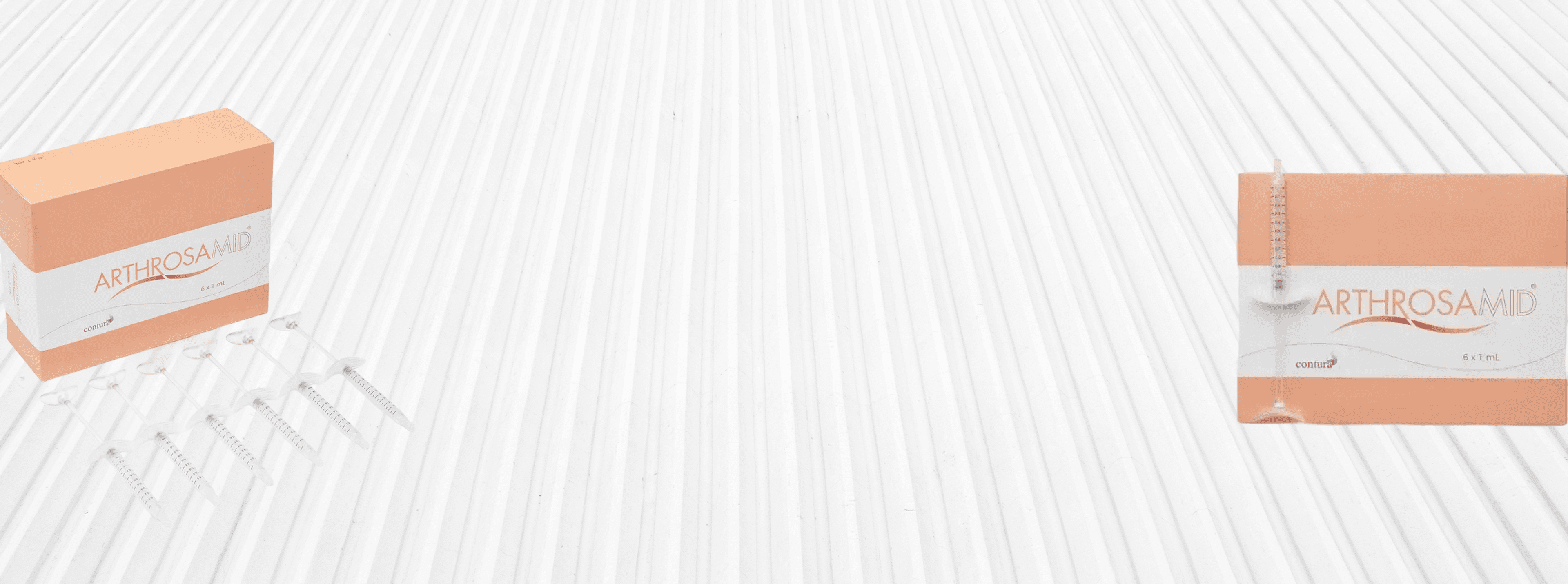
Arthrosamid® vs
Hyaluronic Acid
Two injectable options for knee osteoarthritis with very different mechanisms, duration and treatment patterns. Here is the honest comparison from London Cartilage Clinic.
 Reviewed byProfessor Paul YF Lee MBBch, FRCS (Tr & Orth), PhDCartilage and joint preservation expertise
Quick Answer
Hyaluronic acid is a resorbable viscosupplement, while Arthrosamid® is a non-resorbable polyacrylamide hydrogel designed for symptom management from a single injection. Arthrosamid observational outcomes are reported through 24 months. The two have different roles, so suitability decides rather than a blanket ranking. The decision depends on diagnosis, prior treatment, risk tolerance and preferences.
The Headline Difference
Arthrosamid® vs Hyaluronic Acid — the key difference
The biggest difference is what the body does with the injection. Hyaluronic acid is reabsorbed by the joint over time. Arthrosamid® is non-absorbable and intended to remain in the joint. That material difference affects consent, infection precautions and the willingness to choose a non-absorbable product; it does not provide an individual duration guarantee.
Mechanism of Action
How each treatment works
Arthrosamid® is a polyacrylamide hydrogel injected into the knee joint under ultrasound guidance. The gel integrates into the synovial membrane and is intended to remain in the joint. It is not regenerative; its target is the synovium, not the joint fluid.
A single injection is the typical treatment course in suitable patients.
Hyaluronic acid (HA) is a viscous lubricating substance naturally found in joint fluid. Injected forms are usually derived from bacterial fermentation. HA injections replace and supplement the joint’s lubricating fluid for a period of weeks to months before being reabsorbed by the body.
Common UK brands include Durolane (single-dose) and Monovisc, alongside multi-dose regimens that require three to five weekly injections.
How Long Results May Last
Duration and number of injections
Observed to 24 months
Around 6 months
Duration figures are averages from published data; not a guarantee for any individual case. Outcomes are confirmed and discussed in writing at consultation.
Treatment Course
Number of injections
The manufacturer describes a single 6 ml intra-articular knee injection administered by a qualified physician. The clinical plan and current London Cartilage Clinic price tier are confirmed after assessment; this page does not promote Arthrosamid for other joints.
Single-dose HA preparations (e.g. Durolane) require one injection. Older multi-dose preparations require three to five weekly injections per treatment course. Many patients repeat the course every six to twelve months for ongoing benefit.
Safety and Infection
Safety considerations
Both treatments are delivered under ultrasound guidance at London Cartilage Clinic. The most serious risk for either includes joint infection. Sterile technique and image guidance do not eliminate risk.
Arthrosamid® carries a different risk profile because the hydrogel is non-absorbable and intended to remain in the joint. A serious infection may be harder to manage. London Cartilage Clinic uses routine IV antibiotic cover for Arthrosamid® specifically. For hyaluronic acid the antibiotic decision is made on a case-by-case basis.
See Arthrosamid® infection risk and prevention and Arthrosamid® side effects and safety for the full picture.
Patient Selection
Who each treatment may suit
Hyaluronic acid is often used as a first-line or repeat-injection option for milder knee osteoarthritis where short-to-medium-term symptom control is the goal. Arthrosamid® tends to be discussed by patients who have already tried conservative options or HA and want to consider a non-absorbable single-injection option. It is not proved to delay surgery.
Neither treatment is a substitute for knee replacement where replacement is clinically appropriate. See who is suitable for Arthrosamid? for the full suitability framework.
Cost and Value
What each treatment costs
At London Cartilage Clinic, Arthrosamid® costs from £3,000 for one box, inclusive of ultrasound, the product, the fifteen-step injection protocol and the six-week follow-up, with the consultation (£350) charged separately. See the Arthrosamid® cost guide for two- and three-box pricing.
Hyaluronic acid injection pricing depends on the brand, the number of doses required and whether ultrasound guidance is used. Multi-dose courses cost more in total than the headline single-injection price. A fair comparison should use the actual recommended course and inclusions, not assume a particular Arthrosamid response duration.
Our Honest Take
When we may recommend each
You have established knee osteoarthritis with mild-to-moderate cartilage wear.
You have tried conservative treatment or HA and want longer-acting symptom control from a single injection.
You understand that symptom management is not proved to delay surgery and accept the product-specific safety protocol.
You are at an earlier stage of osteoarthritis and a shorter-duration option is acceptable.
You want to try a resorbable injection before accepting a non-absorbable hydrogel.
You have a clinical or personal reason to avoid material intended to remain in the joint.
When Each Is The Wrong Answer
When we would not recommend each
End-stage bone-on-bone arthritis where Arthrosamid® is unlikely to deliver meaningful benefit.
Active infection or unwillingness to accept the conservative safety protocol.
Unrealistic expectation of cure, cartilage regeneration or guaranteed permanent relief.
Patients who prefer a non-absorbable single-injection option rather than repeat courses.
Where prior HA has not delivered useful benefit, repeating may not be the right next step.
End-stage arthritis where neither injection is likely to defer the need for replacement.
The Bottom Line
In summary
In suitable patients with mild-to-moderate knee osteoarthritis, Arthrosamid is non-absorbable; hyaluronic acid is resorbable. Evidence, previous response, infection considerations and willingness to accept a material intended to remain in the joint matter more than a blanket “which lasts longer?” claim. The decision is made after assessment and imaging review.
Arthrosamid® vs Hyaluronic Acid
Frequently asked questions
Can I have Arthrosamid® if I have already had hyaluronic acid?
Yes, in most cases. Prior hyaluronic acid is not a contraindication to Arthrosamid®. We typically wait until the previous HA injection effects are no longer the dominant variable, but each case is decided on the imaging and clinical picture at consultation.
Is Arthrosamid® more effective than hyaluronic acid?
Available comparative evidence does not establish that Arthrosamid is generally more effective. One randomised comparison did not show a significant difference from hyaluronic acid. The decision should be individual rather than a superiority claim.
Is hyaluronic acid available on the NHS in the UK?
Hyaluronic acid is available on a limited basis through some NHS pathways but is not routinely commissioned everywhere. Arthrosamid® is not routinely funded by the NHS. Both are accessed privately at London Cartilage Clinic.
Can I switch from hyaluronic acid to Arthrosamid® if HA stops working?
Yes, this is a common reason patients consider Arthrosamid®. We will review imaging and confirm suitability — Arthrosamid® is not right for every patient, but a diminishing response to HA is a reasonable reason to discuss alternatives.
Does hyaluronic acid regenerate cartilage?
No. Hyaluronic acid is a joint lubricant. It supplements the natural fluid in the joint but does not regenerate cartilage tissue. Neither does Arthrosamid®. Both treat symptoms rather than underlying disease.

Book an Arthrosamid® Assessment – London
Long-lasting relief starts with the right decision — not just an injection.