



Introduction
Hip flexor pain is a common problem that can be tricky to understand and manage. This discomfort can affect everyday activities, movement, and overall well-being. Knowing exactly where hip flexor pain is felt is vital, because getting it wrong can lead to ineffective treatment and longer recovery times. In this article, we’ll look at the hip flexor muscles, where pain often occurs, common causes (including how symptoms may differ between women and men), and practical ways to handle this pain. Whether you’re experiencing hip flexor pain or curious to learn more, this guide aims to make the topic clearer and easier to navigate.
Understanding the Hip Flexor Muscles and Their Role
The hip flexors are a group of muscles at the front of the hip that allow you to lift your thigh towards your abdomen. The main players here are the iliopsoas, rectus femoris, and sartorius muscles. These muscles are crucial for everyday movements like walking, running, and climbing stairs, while also helping keep you stable and upright. Because the hip joint is such a complex structure with bones, ligaments, tendons, and several muscle groups working together, it can be difficult to pinpoint exactly where pain is coming from. Understanding these muscles and their roles helps explain why hip pain might show up in slightly different areas depending on the cause. Recent research highlights that “as the iliopsoas loses its function as the most important hip flexor, the rectus femoris takes over its function, which makes the rectus prone to tendinopathy” (Declercq et al., 2025). This shift can affect how and where pain develops.
Where Is Hip Flexor Pain Felt? Localisation and Key Symptoms
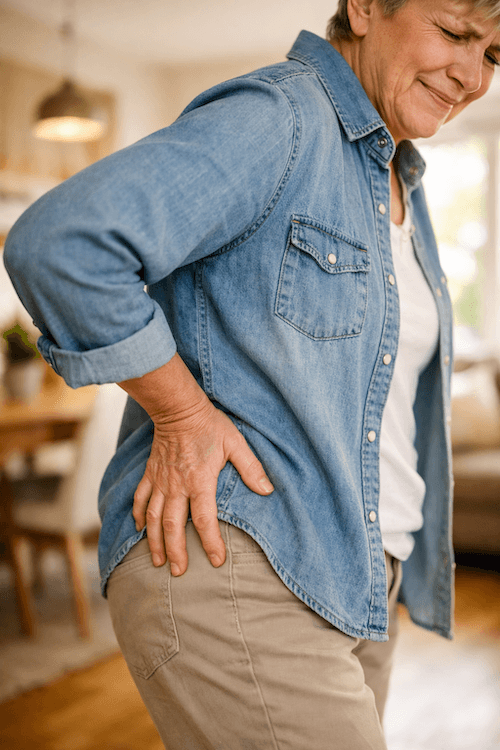
Most often, hip flexor pain is felt at the front of the hip or in the groin area, though it can sometimes spread to the upper thigh or the side of the pelvis. This pain may feel like a dull ache or sharper discomfort, often worsening when you lift your leg, bend, or sit for long periods. Women may notice particular pain patterns. For example, complaints of “pain in left hip area female” or “pulled hip muscle female symptoms” reflect anatomical and hormonal differences influencing how pain presents. Common signs include tenderness when touching the hip flexor area, stiffness, and limited movement, which often get worse with activity. A case study involving a female athlete noted she was “tender to palpate at the right hip flexor and anterior hip joint, as well as the greater trochanter” after injury (Pai & Han, 2023).
Causes of Hip Flexor Pain, Strain, and How to Identify Them
Hip flexor pain often comes from muscle strains caused by overuse, sudden twisting, or injury during sport or everyday tasks. Sitting too long or poor posture may tighten these muscles, causing discomfort. Additional factors like uneven leg length or walking gait problems can place extra stress on the hip flexors. Symptoms usually start as stiffness and then develop into pain when moving. One handy clinical test to assess hip flexor tightness is the Modified Thomas Test (MTT). “The MTT is commonly used to assess the flexibility of hip musculature, including the iliopsoas, rectus femoris, and tensor fascia latae” (Eimiller et al., 2024). Furthermore, this test has been shown to be reliable, with “high intra-rater reliability (ICC = 0.911) and inter-rater reliability (ICC = 0.851)” when performed carefully (Eimiller et al., 2024). If pain persists or worsens, or doesn’t respond to initial home care, it’s important to see a professional. In some cases, lasting groin pain after certain surgeries can lead to muscle changes: “patients with persistent groin pain following iliopsoas tenotomy exhibit changes in the peri-articular muscle envelope, displaying atrophy or fatty degeneration in all muscles except the gluteus medius” (Declercq et al., 2025).
Next steps
Where to go from here
These routes are selected from the topic and purpose of this article. They are guidance, not a diagnosis or treatment recommendation.
Learn more
Explore treatment options
Talk to the team
Book a free discovery call
Alleviating and Managing Hip Flexor Pain
Relief often starts with rest and gentle stretches aimed at improving flexibility and strength. Making small adjustments—such as avoiding long periods sitting and maintaining good posture—can ease discomfort during daily routines. There are also targeted methods for quick relief like “how to relieve hip pain from sleeping on side,” which focuses on positioning to avoid pressure, and “how to relieve hip flexor pain in 30 seconds,” often involving simple stretches or gentle movements. Exercises designed to ease “hip and leg pain” can be very effective when done regularly. Rehabilitation should be approached carefully and progressed gradually to avoid re-injury. Recovery times vary based on the injury but usually range from a few weeks to a few months. Supporting this, a case showed how “the athlete was able to return to activities of daily living (ADLs) after 12 weeks and fully participate in sports without limitations by 24 weeks” (Pai & Han, 2023). However, it’s important to note that “awareness of potential risks is crucial when contemplating iliopsoas tenotomy” as a treatment option (Declercq et al., 2025).
When and Why to Seek Specialist Advice
If your hip flexor pain is ongoing, severe, comes back repeatedly, or worsens despite home care, it’s wise to consult a specialist. Professor Paul Lee, an orthopaedic and cartilage expert at London Cartilage Clinic, brings extensive experience diagnosing and treating complex muscle and joint issues. The London Cartilage Clinic offers tailored, patient-centred care in a professional and supportive environment. A personalised assessment and treatment plan can make a significant difference in addressing your specific hip flexor pain and improving your outcome.
Conclusion
In summary, hip flexor pain is most commonly felt at the front of the hip, groin, or upper thigh. Symptoms and pain patterns vary depending on cause and individual differences—sometimes influenced by gender. Understanding where the pain typically occurs and the anatomy involved is key to managing it early. Starting with gentle stretching, improved posture, and sensible self-care can help ease symptoms. But always listen to your body and seek expert advice if you’re unsure. Correct diagnosis and treatment are essential to get back to everyday life and activities safely. --- Disclaimer
For individual medical advice, please consult a qualified healthcare professional. ---
References
- Pai, H., & Han, K. (2023). Periacetabular Osteotomy for Hip Dysplasia in a NCAA Division I Female Water Polo Athlete. Asian Journal of Kinesiology, 25(3), 43. https://doi.org/10.15758/ajk.2023.25.3.43
- Declercq, J., Vandeputte, F., Clinckemaillie, G., Roose, S., Timmermans, A. A. A., & Corten, K. (2025). The peri-articular muscle envelope of the hip (PAME) shows atrophy in patients with refractory groin pain after iliopsoas tenotomy. Journal of Orthopaedics and Traumatology. https://doi.org/10.1177/11207000241309600
- Eimiller, K., Stoddard, E., Janes, B., Smith, M., & Vincek, A. (2024). Reliability of Goniometric Techniques for Measuring Hip Flexor Length Using the Modified Thomas Test. Journal of Medical Research and Practice, 5(1). https://doi.org/10.26603/001c.120899
Frequently Asked Questions
- Hip flexor pain usually presents at the front of the hip or groin, sometimes extending to the upper thigh. Common symptoms are a dull ache or sharp pain, especially with leg lifting or after sitting, and may include stiffness and tenderness in the affected area.
- Professor Paul Lee is a renowned cartilage expert and Royal College of Surgeons advisor, offering advanced, tailored treatment. London Cartilage Clinic provides specialist, patient-centred care with state-of-the-art diagnosis and management for complex hip and joint problems, delivering individual solutions for each patient’s needs.
- Hip flexor pain commonly results from muscle strains, overuse, poor posture, or acute injury. Specialist assessment, alongside clinical tests like the Modified Thomas Test, helps accurately identify the pain’s cause, ensuring the most suitable and effective management strategy is recommended for each patient.
- Initial care often involves gentle stretching, improved posture, and avoiding aggravating activities. Simple routine adjustments, performed safely, may relieve symptoms. However, if pain is persistent or severe, consultation at the London Cartilage Clinic is advised to explore advanced management options with Professor Lee’s expertise.
- If hip flexor pain is persistent, severe, returns frequently, or does not improve with self-management, seeking specialist advice is essential. The London Cartilage Clinic, led by Professor Paul Lee, offers thorough assessment and expert guidance to address complex muscle and joint issues effectively.
Next steps
Where to go from here
These routes are selected from the topic and purpose of this article. They are guidance, not a diagnosis or treatment recommendation.
Learn more
Explore treatment options
Use a structured overview to narrow down the most useful next step for your situation.
Talk to the team
Book a free discovery call
A non-medical call with the team to understand services and choose the right booking route.
Legal & Medical Disclaimer
This article is published by London Cartilage Clinic for general information and education only. It does not constitute medical advice, diagnosis, or treatment.
Always seek personalised advice from a qualified healthcare professional before making decisions about your health. London Cartilage Clinic accepts no responsibility for errors, omissions, third-party content, or any loss, damage, or injury arising from reliance on this material.
If you believe this article contains inaccurate or infringing content, please contact us at [email protected].


