








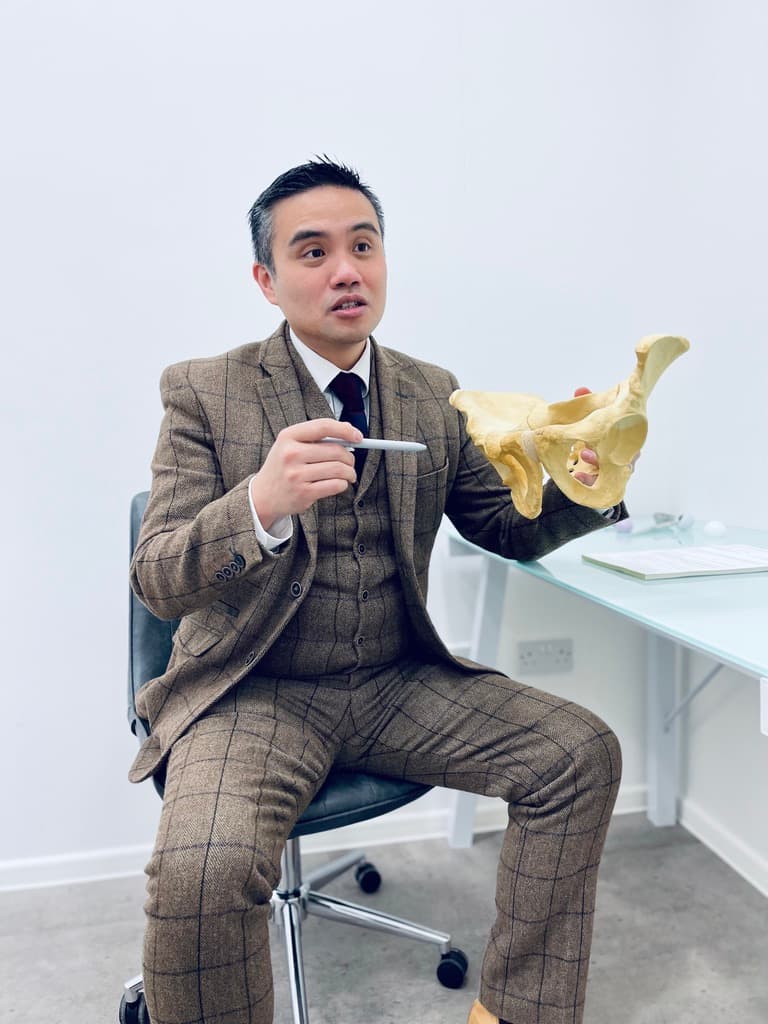

Surgeon demonstrating hip anatomy on pelvic model

Hip Replacement Evidence & Outcomes

Published practice data
View Price List

Guide price only. Final cost is confirmed after assessment.

The published evidence and outcomes behind hip replacement at London Cartilage Clinic. Professor Paul Lee’s safety record, the SPAIRE muscle-sparing technique citation, long-term implant survival data, and training pedigree at the Exeter Hip Unit. Reported plainly, with the underlying clinical detail explained in non-medical language.

Practice safety record

Four published outcome measures

Reported from the full set of private hip replacements performed by Professor Paul Lee to date. As the practice grows, these figures will continue to be reported publicly and honestly.

Blood transfusion0%

No patients in Professor Lee’s private hip replacement practice have required a blood transfusion. Blood-loss management is built into the surgical technique and anaesthetic plan.

MRSA infection0%

Zero MRSA surgical site infections recorded. Reflects the infection-control protocol at the 5-star Weymouth Street Hospital and the surgical team’s technique.

Day-of cancellation0%

Every scheduled hip replacement has gone ahead on the planned day, with no on-the-day cancellations. Reflects rigorous pre-operative optimisation and scheduling.

Symptomatic DVT0%

No symptomatic deep vein thrombosis events recorded after surgery. Reflects early mobilisation, the muscle-sparing technique, and a tailored anti-clotting protocol.

Surgical technique

The SPAIRE muscle-sparing technique

SPAIRE stands for Save Piriformis And Internus, Repair Externus. It is a modern posterior approach to total hip replacement that keeps the piriformis and obturator internus tendons at the back of the hip intact, instead of detaching and reattaching them. The obturator externus is repaired at the end of the operation.

By keeping those tendons intact, the approach is intended to support the natural posterior stability of the hip and help suitable patients mobilise more confidently after surgery.

Professor Paul Lee trained in the SPAIRE approach at the Exeter Hip Unit under Professor Timperley, who developed and published the technique.

Peer-reviewed reference
Hanly RJ, Sokolowski S, Timperley AJ. The SPAIRE technique allows sparing of the piriformis and obturator internus in a modified posterior approach to the hip. Hip International, 2017.
Implant survival

How long do modern hip replacements last?

Current data shows that over 90% of modern hip replacements are still functioning well at 15 to 20 years. Advances in bearing materials, particularly highly cross-linked polyethylene and ceramic-on-polyethylene pairings, and improvements in surgical technique have steadily lifted long-term survival.

Implant choice at London Cartilage Clinic is made based on patient age, activity level and anatomy. Pre-operative templating optimises leg length, offset and implant fit before the operation begins, which is one of the strongest predictors of long-term success.

Talk through your hip with Professor Paul Lee

Bring your imaging and your questions. Hip replacement is one of several options, and the right next step is decided in a consultation, not from a stats page.

consulting-in-office-with-pen

Frequently Asked Questions

What is the published evidence for the SPAIRE technique?

SPAIRE was described in Hanly RJ, Sokolowski S, Timperley AJ. The SPAIRE technique allows sparing of the piriformis and obturator internus in a modified posterior approach to the hip. Hip International, 2017. The technique preserves the small rotator tendons at the back of the hip, instead of detaching and reattaching them, with the aim of supporting hip stability and earlier confident mobilisation.

How long do modern hip replacements last?

Current data shows that over 90% of modern hip replacements are still functioning well at 15 to 20 years. Advances in bearing materials and surgical technique continue to improve longevity. Younger, more active patients benefit from careful implant selection to maximise durability.

How is Professor Paul Lee’s safety record reported?

Four outcome measures are reported from Professor Lee’s private hip replacement practice: blood transfusion rate, MRSA infection rate, day-of cancellation rate, and symptomatic deep vein thrombosis (DVT) rate. All four are currently at 0%. As the practice grows, these figures will continue to be reported publicly and honestly.

Where did Professor Lee train in hip replacement?

Professor Lee trained in the SPAIRE muscle and tendon-sparing posterior technique at the Exeter Hip Unit under Professor Timperley, who developed and published the technique. Exeter is one of the world-renowned centres for hip surgery in the UK.

Does London Cartilage Clinic publish outcomes for biological treatments too?

Yes. Outcomes for Arthrosamid and other biological treatments are published on the relevant treatment pages and evidence pages. London Cartilage Clinic has been an active publisher of real-world clinical outcomes since the clinic opened.

Still have more specific concerns?

Free Discovery Call

London Cartilage Clinic

Latest Insights

Clinical updates, cartilage treatment guidance, and recovery-focused articles from our specialist team.

When ankle cartilage repair is still an option
Foot & Ankle Cartilage
Eleanor Hayes

When ankle cartilage repair is still an option

The article explains when ankle cartilage repair may still be possible for a localised talar lesion, how MRI and bone loss guide treatment, and when simpler repair, scaffold-based surgery, fixation or bone grafting may be more suitable than fusion or replacement.

Ideal Candidates for Cartilage Regrowing Gel Injections
Eleanor Hayes

Ideal Candidates for Cartilage Regrowing Gel Injections

Cartilage-regrowing gel injections represent a promising, minimally invasive treatment for localized knee cartilage damage, offering pain relief and improved mobility without traditional surgery. Ideal candidates are active adults with small cartilage defects, assessed through expert consultation and MRI imaging to ensure suitability. While studies highlight the safety and effectiveness of gels like ChondroFiller, patients with advanced osteoarthritis or joint deformities may require alternative therapies. Specialist evaluation by orthopaedic experts, such as those at the London Cartilage Clinic, is essential to tailor treatment plans. This approach fosters natural cartilage repair, providing an innovative option for individuals seeking relief from cartilage-related knee pain.

Ankle Cartilage Damage Causes Impact and Management
Eleanor Hayes

Ankle Cartilage Damage Causes Impact and Management

Ankle cartilage damage is a common yet often overlooked condition impacting mobility and quality of life. This article details the causes, symptoms, and diagnosis of ankle cartilage issues, emphasizing early recognition through pain, swelling, and stiffness. It outlines both non-surgical and surgical treatments, including microfracture surgery and autologous chondrocyte implantation, tailored to individual needs. Rehabilitation and prevention strategies focus on restoring joint function and minimizing further damage. Highlighting Professor Paul Lee and the London Cartilage Clinic's expertise, the article provides insights into advanced, patient-centred care and future directions in cartilage repair. Early consultation with specialists is essential for effective management and improved outcomes.

Privacy & Cookies Policy