











Patient experiencing hip arthritis pain

Condition · Hip

Hip Arthritis

Pain, stiffness and a progressively shorter walking distance from cartilage wear in the hip joint. Assessed and treated at London Cartilage Clinic by Professor Paul Lee, with biological and joint-preserving options first and hip replacement when it is the right next step.

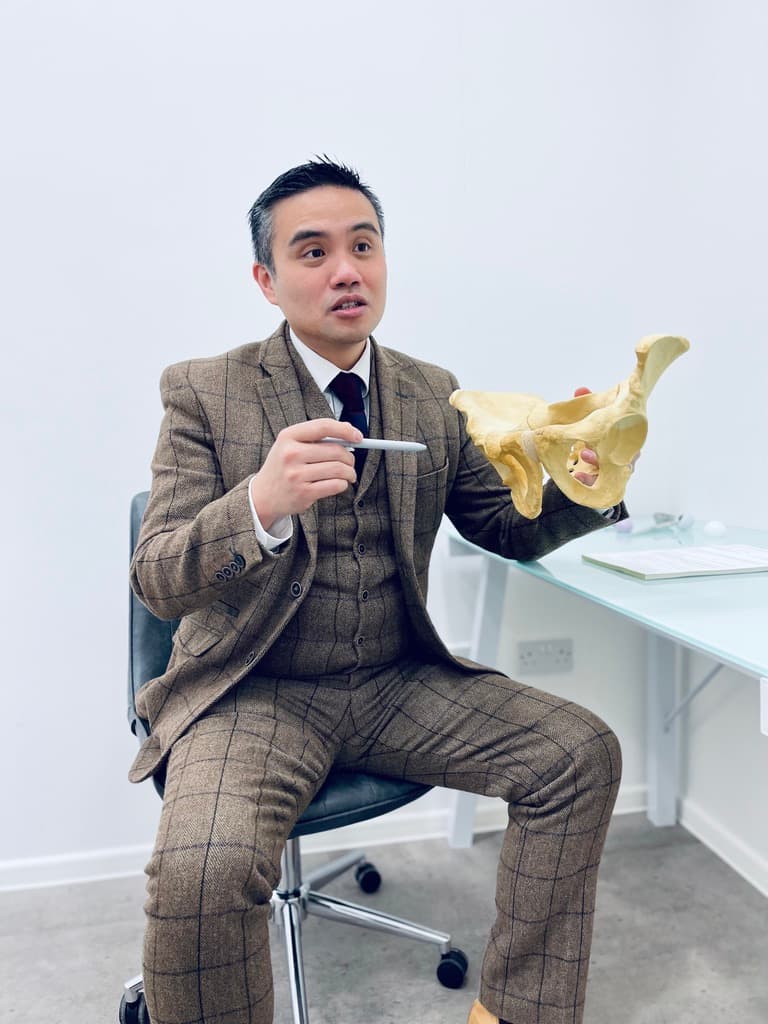
Surgeon demonstrating hip arthritis anatomy on a pelvic model

What hip arthritis actually does to the joint

The hip is a ball-and-socket joint covered by a smooth layer of cartilage that allows the femoral head and acetabulum to glide against each other almost frictionlessly. Arthritis is the progressive wear of that cartilage.

  • Groin or buttock pain on weight bearing, often worst first thing in the morning or after sitting still.
  • Progressive stiffness, particularly noticed when putting on socks and shoes, or twisting in bed.
  • Shorter walking tolerance over months and years, often unnoticed until you compare what you used to do.
  • Night pain as arthritis advances, sometimes waking you or affecting your sleep position.

Many patients live with hip arthritis for years before seeking specialist advice. The earlier we see you, the more options remain on the table.

Biological and joint-preserving options first

Hip replacement is a well-proven operation, but it is a major operation with a finite implant lifespan. For many patients with hip arthritis, biological treatments and the right physiotherapy can reduce pain, restore function and delay or replace the need for surgery.

When hip arthritis is advanced and biological options are no longer enough, hip replacement led by Professor Paul Lee at the 5-star Weymouth Street Hospital is the right next step.

Active lifestyle after hip arthritis treatment

Not sure which option fits your hip?

Take the readiness self-assessment, or book a consultation with Professor Paul Lee to walk through the full range of options for your hip arthritis.

You may have more options than you think

Most patients have more treatment options than they have been told

At London Cartilage Clinic we follow a structured clinical framework across four areas of treatment. Before recommending a single procedure, we assess which combination of approaches gives you the best outcome.

Preserve

Protect what you have. Slow degeneration and manage symptoms.

Repair

Fix specific damage. Torn tissue, unstable joints, structural problems.

Regenerate

Rebuild lost tissue. Biological treatments that stimulate new growth.

Replace

When other options are exhausted. Joint replacement as a last resort.

Explore the full range of treatments available for your joint. Each hub page shows every option we offer, organised by clinical approach.

consulting-in-office-with-pen

Frequently Asked Questions

What is hip arthritis?

Hip arthritis is degeneration of the cartilage surfaces in the hip joint. The most common type is osteoarthritis, but post-traumatic, inflammatory and dysplastic patterns are also seen. As cartilage thins, the underlying bone is exposed, causing pain on movement, stiffness and a progressively shorter walking tolerance.

What are the early signs of hip arthritis?

Hip arthritis often starts as groin or buttock pain, especially first thing in the morning or after sitting for a long time. Patients often report difficulty putting on socks and shoes, a shorter walking distance, and pain on the affected side when turning in bed.

Can hip arthritis be reversed?

Damaged cartilage does not regrow on its own, but the trajectory can be changed for many patients. Biological treatments such as ChondroFiller, stem-cell hip therapy, mFat and PRP can reduce pain and improve function. Tailored physiotherapy can offload the joint and protect what is left. None of these reverse advanced arthritis, but together they can delay or replace the need for hip replacement.

Do I always need a hip replacement for hip arthritis?

No. Hip replacement is the right answer when arthritis is advanced and biological options are no longer sufficient to support the life you want to live. For many patients, especially earlier in the disease, biological and joint-preserving treatments are a better first step. London Cartilage Clinic assesses every patient for these options before recommending replacement.

Will Professor Paul Lee see me about my hip arthritis?

Yes. Professor Lee leads hip arthritis assessment and treatment at London Cartilage Clinic, including the full range of biological treatments as well as hip replacement when that becomes the right step.

What imaging do I need for hip arthritis?

An X-ray is the usual first step and is often enough to confirm the diagnosis and stage the arthritis. MRI may be requested if there is also suspected labral or soft-tissue damage, or if the picture on X-ray does not match the symptoms. You can bring any recent imaging to your consultation, and we can arrange imaging if you do not have any.

Still have more specific concerns?

Free Discovery Call

London Cartilage Clinic

Latest Insights

Clinical updates, cartilage treatment guidance, and recovery-focused articles from our specialist team.

When ankle cartilage repair is still an option
Foot & Ankle Cartilage
Eleanor Hayes

When ankle cartilage repair is still an option

The article explains when ankle cartilage repair may still be possible for a localised talar lesion, how MRI and bone loss guide treatment, and when simpler repair, scaffold-based surgery, fixation or bone grafting may be more suitable than fusion or replacement.

Ideal Candidates for Cartilage Regrowing Gel Injections
Eleanor Hayes

Ideal Candidates for Cartilage Regrowing Gel Injections

Cartilage-regrowing gel injections represent a promising, minimally invasive treatment for localized knee cartilage damage, offering pain relief and improved mobility without traditional surgery. Ideal candidates are active adults with small cartilage defects, assessed through expert consultation and MRI imaging to ensure suitability. While studies highlight the safety and effectiveness of gels like ChondroFiller, patients with advanced osteoarthritis or joint deformities may require alternative therapies. Specialist evaluation by orthopaedic experts, such as those at the London Cartilage Clinic, is essential to tailor treatment plans. This approach fosters natural cartilage repair, providing an innovative option for individuals seeking relief from cartilage-related knee pain.

Ankle Cartilage Damage Causes Impact and Management
Eleanor Hayes

Ankle Cartilage Damage Causes Impact and Management

Ankle cartilage damage is a common yet often overlooked condition impacting mobility and quality of life. This article details the causes, symptoms, and diagnosis of ankle cartilage issues, emphasizing early recognition through pain, swelling, and stiffness. It outlines both non-surgical and surgical treatments, including microfracture surgery and autologous chondrocyte implantation, tailored to individual needs. Rehabilitation and prevention strategies focus on restoring joint function and minimizing further damage. Highlighting Professor Paul Lee and the London Cartilage Clinic's expertise, the article provides insights into advanced, patient-centred care and future directions in cartilage repair. Early consultation with specialists is essential for effective management and improved outcomes.

Privacy & Cookies Policy