






Bioactive Gels for Natural Cartilage Regrowth and Joint Health
Introduction
Cartilage plays a crucial role in allowing our joints to move smoothly and without pain. It acts as a cushion between bones, absorbing shock during movement. Sadly, once damaged—whether through injury or conditions like osteoarthritis—cartilage struggles to heal on its own. This often leads to ongoing discomfort and reduced mobility. Fortunately, recent medical advances have introduced bioactive gels, a promising new approach that helps the body naturally rebuild cartilage. In this article, we explore how these innovative gels work at a cellular level to encourage genuine cartilage regrowth, offering hope beyond traditional treatments.
The Science Behind Bioactive Gels for Cartilage Regeneration
Bioactive gels act like scaffolds or frameworks, giving the body’s own cells a home base to grow new cartilage. These gels are designed to blend seamlessly with surrounding tissues. They attract cells such as chondrocytes—specialised cartilage-producing cells—or stem cells that can develop into cartilage cells. Thanks to the gel’s unique structure and chemistry, these cells receive support to regenerate hyaline cartilage, the smooth and durable kind that naturally covers joints.
As specialists have noted, “cells, scaffold therapies, and injectable agents have emerged as an adjunctive modality to improve clinical outcomes” in treating cartilage defects (Perez-Carro et al., 2021). Moreover, studies reveal that these gels provide “a good immediate filling of all treated defects” as seen in MRI scans (Schneider, 2016). Further evidence shows that ChondroFiller Liquid, an acellular collagen gel, “stimulates the growth of chondrocytes and the consequent induction of cartilage regeneration” (Corain et al., 2023).
Unlike treatments that simply mask pain, bioactive gels create an environment where real, lasting healing happens. They encourage cells to rebuild cartilage tissue that closely matches the original, healthy cartilage.
How Bioactive Gels Differ from Traditional Joint Injections
Many conventional joint injections—like hyaluronic acid or corticosteroids—focus on lubricating the joint or reducing inflammation. While these can ease symptoms temporarily, they don’t promote actual cartilage repair.
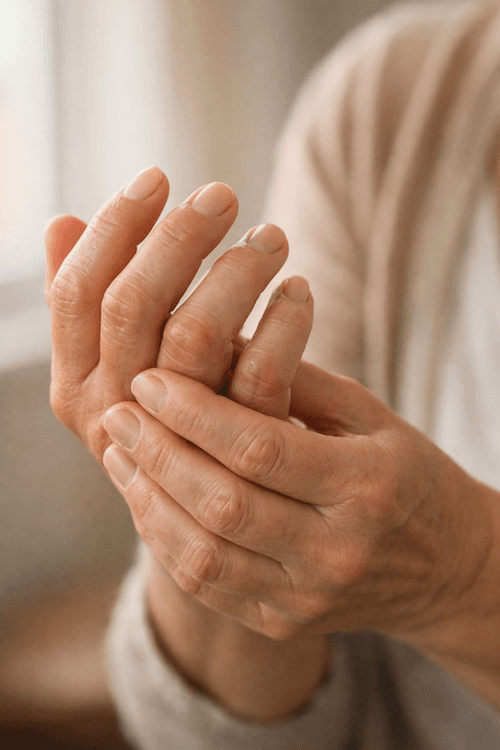
Bioactive gels, however, represent a different approach known as scaffold gel joint repair. They work by activating the body’s natural healing systems, encouraging cell growth and tissue regeneration. Experts explain that “biologic and injectable materials” are now being used even for “full-thickness chondral defects” through minimally invasive procedures (Perez-Carro et al., 2021). Clinical reports also highlight that “the ChondroFiller liquid method is a safe and simple workable method” (Schneider, 2016). In the case of hand joint degeneration, patients experienced “an improvement in pain symptoms, associated with an increase in force in the pincer and grip movements” after treatment with these gels (Corain et al., 2023).
These findings underline the potential of bioactive gels to offer long-lasting joint improvements, rather than just short-term relief.
Hyaline vs. Fibrocartilage: Which Cartilage Does the Gel Help Regrow?
It’s important to understand the difference between hyaline cartilage and fibrocartilage. Fibrocartilage is often laid down in basic repair efforts but is less flexible and not as durable, making it less suitable for joint surfaces.
The ultimate goal in cartilage repair is to regenerate hyaline cartilage—the smooth, glass-like tissue that covers our joints and supports smooth movement and shock absorption. Bioactive gels are designed precisely to encourage this kind of cartilage to grow. Research shows that “a liquid cell-free collagen matrix” can support effective, one-step cartilage repair (Perez-Carro et al., 2021). MRI scans from longer-term studies reveal “an impressive maturation of the reconstructed cartilage” following treatment (Schneider, 2016), while others have observed “a change in the joint profile with reduction of bone oedema and periarticular effusion” after gel infiltration (Corain et al., 2023).
This regeneration of hyaline cartilage helps improve joint durability and reduces the chance of future damage.
Next steps
Where to go from here
These routes are selected from the topic and purpose of this article. They are guidance, not a diagnosis or treatment recommendation.
Learn more
Explore cartilage repair
Talk to the team
Book a free discovery call
Innovations in Gel Technology: From Collagen to Peptides
Cartilage restoration is advancing rapidly thanks to exciting new gel technologies. Collagen-based gels use a natural protein that forms much of our cartilage and connective tissues. These gels provide a structure that closely mimics the body’s own matrix, helping cells to attach and grow.
More recent developments include peptide-based scaffolds—synthetic gels made of short amino acid chains. These can be finely tuned to direct specific cellular responses and encourage more effective cartilage regrowth. Both collagen and peptide gels play a vital role in scaffold gel cartilage repair, with ongoing research exploring optimised blends and formulations to boost results.
The Expertise of Professor Paul Lee and the London Cartilage Clinic
Professor Paul Lee is a highly experienced orthopaedic surgeon and rehabilitation expert based at the London Cartilage Clinic. He holds notable roles such as Regional Surgical Ambassador and adviser to the Royal College of Surgeons. Professor Lee is dedicated to advancing joint care through innovative treatments and a patient-centred approach.
While neither he nor the clinic claims to have developed bioactive gels, the London Cartilage Clinic offers a professional, supportive environment where the latest cartilage restoration techniques are applied expertly. Patients benefit from personalised care plans that combine these advances with thorough rehabilitation to achieve the best possible outcomes.
Conclusion and Responsible Disclaimer
Bioactive gels are opening new doors in cartilage repair by encouraging the body’s natural ability to regrow durable hyaline cartilage. These innovative treatments go beyond merely easing pain—they have real potential to restore long-term joint function and quality of life. That said, individual results can vary, and ongoing research is essential. For tailored advice and treatment options, it’s important to consult a qualified healthcare professional.
References
- Perez-Carro, L., Rosi Mendoza Alejo, P., Gutierrez Castanedo, G., Menendez Solana, G., Fernandez Divar, J. A., Galindo Rubin, P., & Alfonso Fernandez, A. (2021). Hip chondral defects: Arthroscopic treatment with the needle and curette technique and ChondroFiller. Arthroscopy Techniques, 10(6), e1429–e1435. https://doi.org/10.1016/j.eats.2021.03.011
- Schneider, U. (2016). Controlled, randomized multicenter study to compare compatibility and safety of ChondroFiller liquid (cell free 2-component collagen gel) with microfracturing of patients with focal cartilage defects of the knee joint. Virtuoso Net Journal of Procedural Medicine, 5(1), 1-8. https://doi.org/10.5348/VNP05-2016-1-OA-1
- Corain, M., Zanotti, F., Giardini, M., Gasperotti, L., Invernizzi, E., Biasi, V., & Lavagnolo, U. (2023). The use of an acellular collagen matrix ChondroFiller® Liquid for trapeziometacarpal osteoarthritis. Journal of Orthopaedic Surgery & Research, 18(1). https://doi.org/10.1177/19476035251354926
Frequently Asked Questions
- London Cartilage Clinic specialises in advanced treatments like bioactive gels and offers personalised care. Led by Prof Paul Lee, a recognised cartilage expert, the clinic brings together cutting-edge techniques and dedicated rehabilitation for optimal joint health outcomes.
- Bioactive gels provide a scaffold for the body’s cells to regrow hyaline cartilage, supporting natural healing. Prof Paul Lee applies these latest innovations, enabling patients to benefit from treatments that encourage true cartilage repair rather than just masking symptoms.
- Traditional injections provide temporary relief by lubricating joints or reducing inflammation. In contrast, scaffold gel repairs activate natural healing processes and encourage new cartilage growth. At London Cartilage Clinic, such advanced techniques help improve long-term joint function and comfort.
- Absolutely, Professor Lee is a Royal College of Surgeons Ambassador and cartilage expert. His extensive experience ensures patients at London Cartilage Clinic access the latest research-driven therapies, meticulous care plans, and thorough rehabilitation, maximising opportunities for successful joint restoration.
- Hyaline cartilage, the most durable cartilage type, ensures joints move smoothly and pain-free. Bioactive gels used at London Cartilage Clinic support regeneration of this essential tissue—helping patients regain mobility while reducing future wear and ongoing discomfort.
Next steps
Where to go from here
These routes are selected from the topic and purpose of this article. They are guidance, not a diagnosis or treatment recommendation.
Learn more
Explore cartilage repair
Read the reviewed cartilage repair pathway, including who it may help and what happens next.
Talk to the team
Book a free discovery call
A non-medical call with the team to understand services and choose the right booking route.
Legal & Medical Disclaimer
This article is published by London Cartilage Clinic for general information and education only. It does not constitute medical advice, diagnosis, or treatment.
Always seek personalised advice from a qualified healthcare professional before making decisions about your health. London Cartilage Clinic accepts no responsibility for errors, omissions, third-party content, or any loss, damage, or injury arising from reliance on this material.
If you believe this article contains inaccurate or infringing content, please contact us at [email protected].


