








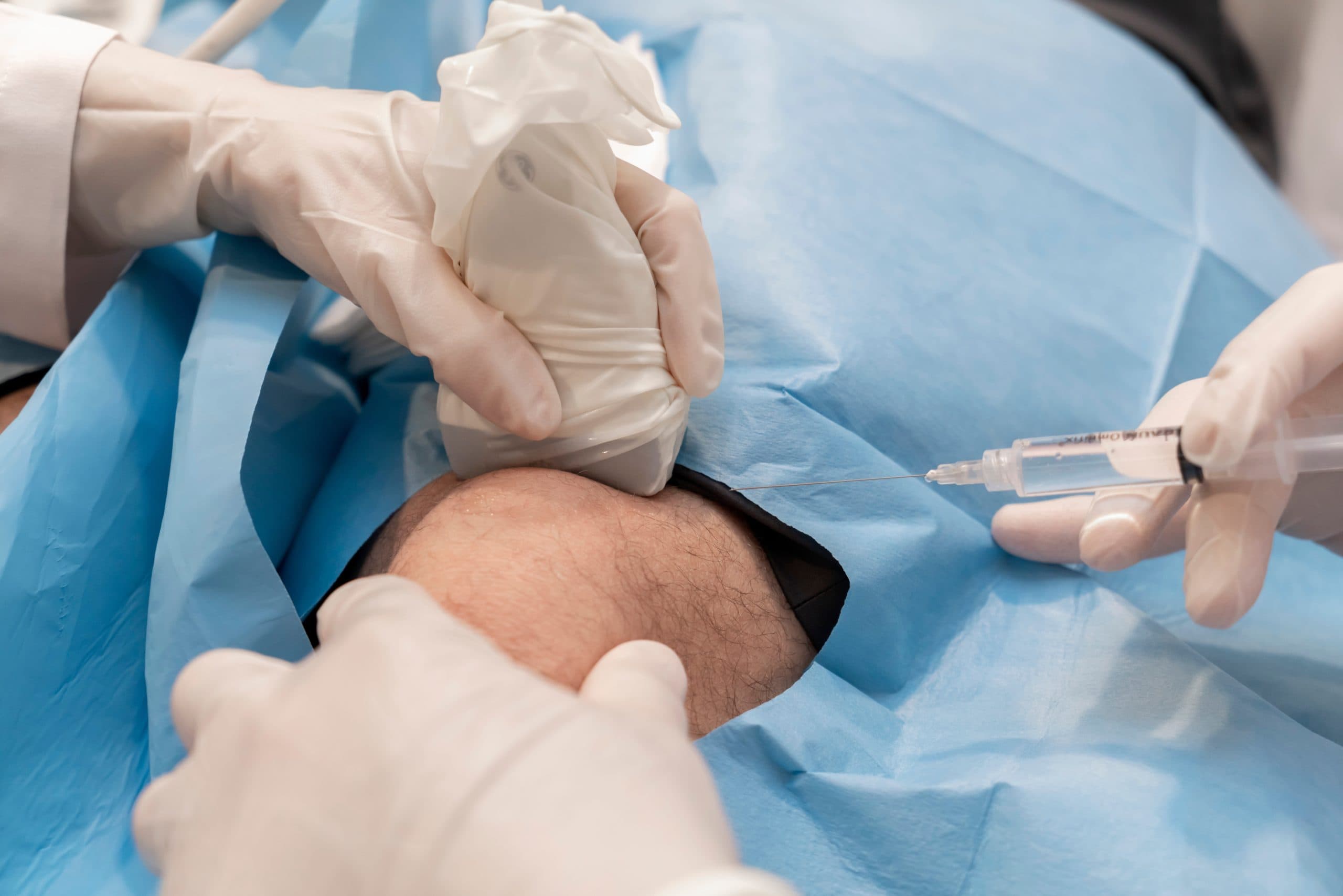




Ultrasound-guided injection into knee joint

Cingal Injection

From £1,200
View Price List

Guide price only. Final cost is confirmed after assessment.

Cingal is a groundbreaking treatment offered at the London Cartilage Clinic for those suffering from osteoarthritis. It uniquely combines a corticosteroid with high-concentration hyaluronic acid in a single injection, providing both immediate and long-lasting relief from joint pain.

Therapist performing manual knee examination

How Cingal works dual-action symptom control

Cingal combines high-concentration hyaluronic acid with corticosteroid in one injection, delivering both lubrication support and anti-inflammatory action.

  • Early symptom relief from steroid-mediated inflammation control.
  • Ongoing mechanical support from viscosupplementation.
  • Useful for osteoarthritis-related pain, stiffness, and reduced function.

This dual-action profile can be beneficial for patients needing both immediate comfort and medium-term joint support.

Why choose Cingal at London Cartilage Clinic

Cingal is delivered as an outpatient treatment with minimal interruption to daily routine and no requirement for major surgery.

  • Single-session treatment designed for convenience and rapid recovery.
  • Specialist-led suitability assessment for safe patient selection.
  • Follow-up planning for symptom monitoring and repeat-treatment timing.

At London Cartilage Clinic, Cingal is integrated into a broader osteoarthritis care pathway to maximise functional gains, not just short-term pain relief.

Doctor holding patient's hand in support
consulting-in-office-with-pen

Frequently Asked Questions

What Symptoms Can Cingal Treat?

Cingal is effective in treating various symptoms of osteoarthritis, including pain, swelling, stiffness, loss of physical function, and limited motion in the joint.

How Long Does the Relief from Cingal Last?

The relief from a Cingal injection is proven to last for 6 months, offering long-term alleviation from osteoarthritis symptoms.

Is Cingal Injection Suitable for Everyone?

Cingal is ideal for individuals with osteoarthritis, particularly those looking for non-surgical treatment options. A consultation with our specialists will help determine if Cingal is the right choice for you.

How can Cingal help with knee pain?

Cingal contains a mixture of a corticosteroid and naturally occurring hyaluronan. This is designed to bolster the lubrication of the knee joint and its ability to absorb impacts. Which, coupled with the reduction in inflammation, can be effective at providing long-term relief from knee pain.

Can there be adverse reactions to Cingal?

Although Cingal is considered to be among the most well tolerated treatments, no medication can be completely risk free. Cingal injections can cause swelling, aching, bruising, redness, or a rash to develop around the site. You may also experience skin thinning. These reactions are typically mild in nature. Nevertheless, if you have any concerns don’t hesitate to speak to your healthcare professional.

Still have more specific concerns?

Free Discovery Call

London Cartilage Clinic

Latest Insights

Clinical updates, cartilage treatment guidance, and recovery-focused articles from our specialist team.

Minimally Invasive Cartilage Repair with ChondroFiller for Enhanced Joint Recovery
John Davies

Minimally Invasive Cartilage Repair with ChondroFiller for Enhanced Joint Recovery

ChondroFiller offers a minimally invasive, arthroscopic treatment for cartilage repair using a collagen-based liquid matrix. This technique involves small keyhole incisions, causing minimal tissue damage and promoting faster recovery with less pain compared to traditional surgery. The collagen matrix adheres securely without stitches, supporting effective cartilage regeneration. Clinical studies report high patient satisfaction, significant improvements in pain and activity levels, and successful integration of the implant. Compared to alternatives like hyaluronic acid injections or microfracture surgery, ChondroFiller combines biological healing with low-impact, precise delivery. Expert care at specialized clinics further enhances outcomes. This gentle yet effective approach helps patients regain joint function and return to active lifestyles safely and comfortably.

Natural Limitations and Realities of Knee Cartilage Healing
John Davies

Natural Limitations and Realities of Knee Cartilage Healing

Knee cartilage has a very limited capacity to heal or regrow naturally due to its lack of blood vessels and unique biology. While minor surface damage may repair to some extent, true cartilage regrowth is rare, especially after serious injury. Factors like age, genetics, activity level, and weight influence cartilage repair, but lifestyle changes mainly help protect existing cartilage and maintain joint health. Medical interventions such as microfracture surgery and cell-based therapies aim to stimulate repair, yet complete regeneration remains elusive. Promising treatments like ChondroFiller liquid require further research and precise application. Expert guidance and realistic expectations are essential, as many claims of cartilage regrowth lack scientific support. For effective management of knee cartilage issues, consultation with qualified healthcare professionals and evidence-based care are paramount.

How Turf Toe Can Lead to Labrum Tear Complications
John Davies

How Turf Toe Can Lead to Labrum Tear Complications

Turf toe, an injury to the big toe's ligaments from hyperextension, is common in athletes and can lead to altered gait patterns. This compensation increases stress on other joints, notably the hips and shoulders, raising the risk of labrum tears—damage to the cartilage stabilizing these ball-and-socket joints. Proper diagnosis using physical exams and imaging, along with multidisciplinary treatment approaches including rest, physiotherapy, and occasionally surgery, are essential for recovery. Understanding the biomechanical link between turf toe and labrum tears highlights the importance of a whole-body rehabilitation strategy to prevent secondary injuries and support long-term athletic performance.