







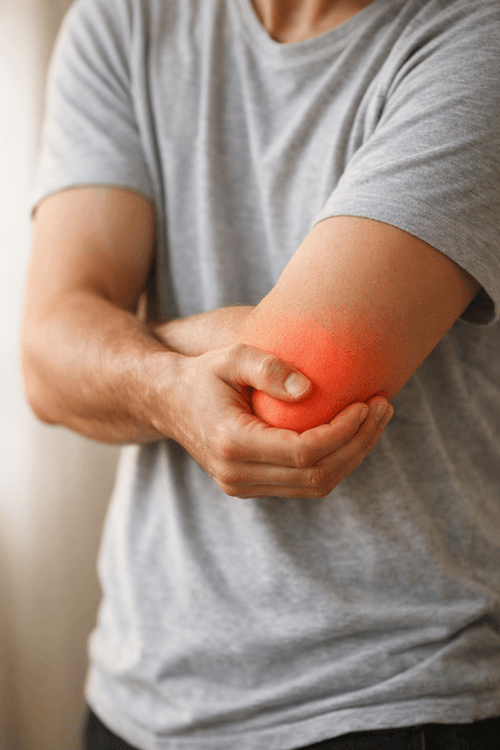
01 · Seed

NanoATi · Evidence by component
What supports each part of NanoATi?
NanoATi can begin with a tendon-derived tenocyte Seed or an accessible hair-derived fibroblast-rich Seed, then adds collagen support and an autologous signal. The human evidence for each component is shown and labelled by how directly it applies.
 Reviewed byProfessor Paul Lee MBBch, FRCS (Tr & Orth), PhDCartilage and joint preservation expertise
Quick answer
NanoATi combines a tendon-derived or hair-derived autologous Seed, a type-I collagen Soil and a platelet-rich plasma Signal with precise placement and progressive loading. Human autologous-tenocyte studies, hair-follicle research, collagen scaffold models and randomised PRP trials in tendinopathy support each part. Outcomes for the complete technique are recorded at the clinic.
Verified across three networks
Trusted by patients on Doctify, Google and Top Doctors
A transparent evidence map
Three components. Three evidence questions.
Each part is assessed against the tendon target. Evidence for one component is never presented as proof of the complete protocol.
02 · Soil
Type-I collagen scaffold
03 · Signal
Platelet-rich plasma
01 · Seed
Autologous tenocyte or fibroblast-rich micrografts
Professor Lee can select a small direct tendon sample to retain tissue-specific tenocytes, or a hair-follicle-bearing dermal sample as an accessible fibroblast-rich source. The tissue is mechanically processed on the day rather than culture-expanded.
How directly does the evidence apply?
Human autologous-tenocyte studies establish that tendon-derived cells can be harvested and delivered to resistant human tendinopathy, including a reported partial-thickness rotator-cuff case. Human hair-follicle research establishes an accessible multipotent dermal cell niche. Professor Lee prepares either Seed on the day by mechanical processing.
Target-tissue evidenceHuman pilot clinical study involving 20 patients with chronic lateral epicondylitis.
Autologous tenocytes for resistant human tendinopathy
Wang A et al. American Journal of Sports Medicine. 2013;41(12):2925–2932.
Tenocytes expanded from a small patellar-tendon biopsy were delivered under ultrasound guidance; the study reported improved pain, function, grip strength and MRI appearance at 12 months.
Why it belongs here: Direct human evidence for autologous tendon-cell harvest and injection, but it used culture-expanded tenocytes, a different tendon and not the same-day combined NanoATi protocol.
Read the published sourceTarget-tissue evidenceHuman clinical case report in an elite gymnast.
Autologous tenocytes in a partial rotator-cuff tear
Wang A et al. BMJ Case Reports. 2013;2013:bcr2012007899.
A partial-thickness rotator-cuff tear was treated with ultrasound-guided autologous tenocyte implantation; symptoms and MRI appearance improved and the athlete returned to national competition.
Why it belongs here: Shoulder-specific human experience with tendon-derived cells, but a single case using culture expansion—not evidence for the complete NanoATi technique.
Read the published sourceMechanistic evidenceHuman hair-follicle cell isolation and laboratory differentiation study.
Multipotent cells from human hair follicles
Bajpai VK et al. Stem Cell Research. 2012;8(1):74–84.
Human hair-follicle-derived mesenchymal cells were highly proliferative and most clones demonstrated differentiation across two or three tested lineages.
Why it belongs here: Human donor-niche evidence for the hair-derived option, but not tenocyte differentiation, same-day micrografts or a tendon treatment outcome.
Read the published source02 · Soil
Injectable type-I collagen scaffold
A three-dimensional type-I collagen framework used to support local retention and organisation around the delivered micrografts.
How directly does the evidence apply?
Tendon is predominantly type-I collagen. A small human pilot combined tendon-derived cells with a different type-I collagen scaffold during rotator cuff repair. Professor Lee selects ChondroFiller as the injectable Soil; its published product evidence is in cartilage, and its tendon use rests on that type-I collagen biology.
Indirect evidenceSmall clinical pilot involving 18 surgical patients.
Tendon-derived cells with a type-I collagen scaffold in rotator cuff repair
Human pilot study. 2022. PMID: 34976729.
The study explored tendon-derived cells carried on a type-I collagen scaffold during rotator cuff repair.
Why it belongs here: Biologically relevant but indirect: a different scaffold, a surgical procedure and a different cell-processing pathway.
Read the published source03 · Signal
Autologous platelet-rich plasma
A platelet concentrate prepared from the patient’s blood, used to deliver platelet-derived growth factors at the target.
How directly does the evidence apply?
PRP has randomised human trials in chronic tendinopathy showing better pain and function than needling, shock-wave therapy or corticosteroid. Those studies test PRP alone; in NanoATi it is the Signal delivered alongside the Seed, the Soil and progressive loading.
Target-tissue evidenceDouble-blind multicentre randomised controlled trial, 230 patients.
PRP for chronic tennis elbow: multicentre randomised trial
Mishra AK et al. American Journal of Sports Medicine. 2014;42(2):463–471.
At 24 weeks more patients treated with PRP reported successful pain relief than those given a needling control.
Why it belongs here: Human target-tissue evidence that the patient’s own platelets help chronic tendinopathy. PRP alone, delivered without a Seed or Soil.
Read the published sourceTarget-tissue evidenceRandomised controlled trial, 46 athletes, twelve-month follow-up.
PRP versus focused shock waves for jumper’s knee in athletes
Vetrano M et al. American Journal of Sports Medicine. 2013;41(4):795–803.
Two PRP injections gave better pain and function scores than shock-wave therapy at six and twelve months.
Why it belongs here: Human target-tissue evidence that the patient’s own platelets help a chronic tendinopathy; PRP alone.
Read the published sourceTarget-tissue evidenceRandomised double-blind controlled trial, 80 patients.
PRP versus corticosteroid for gluteal tendinopathy
Fitzpatrick J et al. American Journal of Sports Medicine. 2018;46(4):933–939.
A single leukocyte-rich PRP injection improved pain and function more than a corticosteroid injection at twelve weeks.
Why it belongs here: Human target-tissue evidence for PRP in a chronic tendinopathy, against the usual injectable comparator.
Read the published sourceThe combined protocol
Three established principles, one technique
NanoATi is Professor Lee’s clinician-developed technique for combining tendon- or hair-derived autologous micrografts, collagen support and an autologous signal. In its standard form it is delivered percutaneously without an operation. Outcomes for the complete technique are recorded at the clinic.
Each component is used within its own evidence base. Professor Lee brings them together in one image-guided session, and outcomes for the complete technique are recorded at the clinic so that it is judged on its own results as well as on the evidence for its parts.
Questions about the NanoATi evidence
Is there direct human evidence for the NanoATi Seed?
Human studies have harvested and injected culture-expanded autologous tenocytes, including a reported partial rotator-cuff tear, and human laboratory work supports the multipotency of hair-follicle-derived cells. Professor Lee prepares the Seed on the day by mechanical processing, without laboratory expansion.
Why use a type-I collagen scaffold in tendon?
The rationale is that tendon is predominantly type-I collagen and ChondroFiller provides an injectable type-I collagen framework. ChondroFiller’s published clinical evidence is in cartilage; its tendon use rests on that type-I collagen biology and on other scaffold research.
What does the PRP tendon evidence show?
PRP has randomised human trials in chronic tendinopathy, including a 230-patient multicentre trial in tennis elbow, with better pain and function than needling, shock-wave therapy or corticosteroid. In NanoATi it is the Signal delivered alongside the Seed, the Soil and progressive loading.
Does the biological injection replace tendon rehabilitation?
No. Progressive mechanical loading remains central to tendon recovery. The loading plan is part of the pathway and the clinical outcome should be judged by strength, function and task tolerance as well as symptoms.
Still have more specific concerns?
Free Discovery CallOptions that our doctors may discuss include NanoACi, ChondroFiller, Mytocel MSK, joint replacement, established conservative care or surgery, depending on examination and imaging.
Discuss the evidence, limitations and alternatives
Professor Lee can explain how the evidence applies to your tendon, where the rationale is extrapolated and whether this pathway is proportionate.