



Cartilage cell therapy rehabilitation

Cartilage cell therapy explained

MACI recovery time and rehabilitation

Staged over two operations and about a year — and how single-stage STACi removes the wait between them.

Quick answer

MACI recovery is staged. Because MACi needs two operations weeks apart, the timeline starts before the main surgery. After implantation, most people use crutches with protected weight-bearing for six to eight weeks, begin gentle movement early with physiotherapy, return to low-impact activity around four to six months, and higher-impact sport at roughly nine to twelve months.

MACI recovery begins before the implant

One thing that surprises people about MACi is that recovery is not a single stretch after one operation — it is staged around two operations. First, a small keyhole biopsy takes a sample of your cartilage cells. Those cells are then grown in a specialist laboratory over roughly four to six weeks. Only then does the second, main operation take place, where the cell-loaded collagen sheet is fitted into the damaged area.

So before rehabilitation of the repair even begins, there is a built-in wait of several weeks between the two surgeries. That gap is part of the MACi pathway, and worth planning for.

The MACI rehabilitation timeline, stage by stage

After the implantation operation, cartilage cell therapies share a broadly similar, carefully protected recovery. It is deliberately gradual, because the new cartilage needs time to mature before it takes full load.

  1. Weeks 0–6 to 8 — protected weight-bearing

    Crutches and a controlled amount of weight through the joint, following your surgeon’s plan, to protect the healing repair.

  2. Early weeks — range of motion with physiotherapy

    Gentle, guided movement starts early to keep the joint supple and encourage the repair to organise well. Physiotherapy is central throughout.

  3. Around 4–6 months — low-impact activity

    A gradual return to everyday activity and low-impact exercise such as cycling and swimming, as strength and confidence rebuild.

  4. Around 9–12 months — higher-impact sport

    Return to running, pivoting and impact sport is typically the last milestone, once the cartilage has matured.

Every timeline is individual and set by your surgeon and physiotherapist based on the joint, the size of the defect and your progress.

How STACi removes the wait between operations

The early rehabilitation pathway after STACi is broadly similar to MACi — protected weight-bearing, early physiotherapy-led movement, then a staged return over several months. Cartilage still needs time to mature, and that biology is the same.

What STACi changes is the front of the timeline. Because STACi brings the laboratory step into theatre, it is most often a single operation — so there is no biopsy operation followed by a four-to-six-week lab wait followed by a second surgery. One procedure replaces two, which removes the between-operations gap entirely and means only one surgical recovery to plan around rather than two.

Same careful maturation of the cartilage; one operation instead of two, with no weeks-long wait in the middle.

Getting your recovery plan right

Recovery outcomes depend heavily on following a structured, joint-specific rehabilitation programme. At London Cartilage Clinic, your rehabilitation is planned around your specific joint and defect and supported by physiotherapy throughout. To understand what recovery would look like in your case, start with a free discovery call or book a consultation.

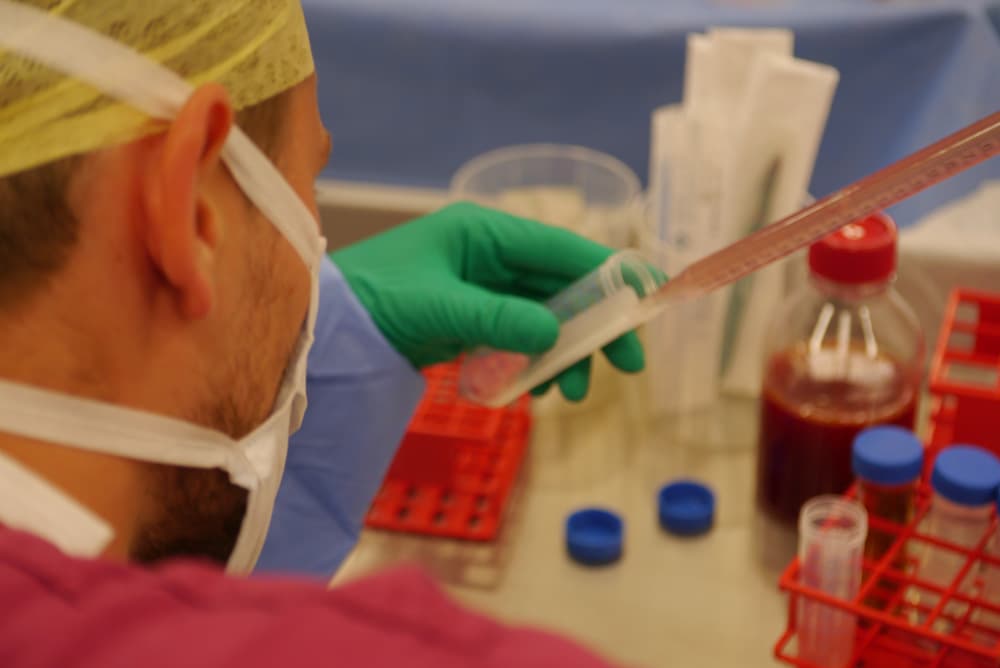
Cartilage cells prepared during a single-stage procedure
STACi's single operation means one surgical recovery, not two.
consulting-in-office-with-pen

Frequently Asked Questions

How long does MACI take to recover from?

MACI recovery is staged. Most people use crutches with protected weight-bearing for six to eight weeks after the implantation operation, return to low-impact activity around four to six months, and higher-impact sport at roughly nine to twelve months. Because MACi needs two operations, there is also a four-to-six-week lab wait beforehand.

Why does MACI recovery involve two operations?

MACi is a two-stage procedure. The first operation is a keyhole biopsy to take cartilage cells; those cells are grown in a laboratory over four to six weeks; the second operation implants the cell-loaded collagen sheet. Recovery therefore spans both surgeries and the wait between them.

How soon can I walk after cartilage cell therapy?

You will usually be up with crutches soon after surgery, but on protected, limited weight-bearing for the first six to eight weeks to shield the healing repair. Full, unaided weight-bearing returns gradually under your surgeon’s and physiotherapist’s guidance.

Is STACi recovery faster than MACI?

The maturation of the new cartilage follows a similar timeline, because that biology is the same. The difference is that STACi is most often a single operation, so it removes the biopsy operation and the four-to-six-week lab wait — meaning one surgical recovery to plan around instead of two.

When can I return to sport?

Higher-impact sport such as running and pivoting is typically the final milestone, at around nine to twelve months, once the cartilage has matured. Lower-impact activity usually returns earlier, around four to six months. Your surgeon sets the exact timeline for your case.

Do I need physiotherapy?

Yes. Structured physiotherapy is central to recovery from any cartilage cell therapy, guiding early movement, protecting the repair and rebuilding strength through each stage. Your programme is tailored to your joint and progress.

Still have more specific concerns?

Free Discovery Call

Want to know what recovery looks like for you?

STACi keeps the careful cartilage maturation of MACi but removes the wait between two operations. Start with a free fifteen-minute discovery call, or book a consultation to have your imaging reviewed by Professor Lee.

London Cartilage Clinic

Latest Insights

Clinical updates, cartilage treatment guidance, and recovery-focused articles from our specialist team.

ChondroFiller injection safety and side effects
Cartilage Repair
Eleanor Hayes

ChondroFiller injection safety and side effects

ChondroFiller injection has produced no serious adverse effects across 19,000+ clinical cases since 2013; the complaint rate stands at 0.06%, among the lowest in cartilage repair. Post-injection swelling, pain, and stiffness resolve within 48–72 hours, but follow-up data beyond three years remain sparse.

What a missed ACL tear does to your knee cartilage
ACL Injury
Eleanor Hayes

What a missed ACL tear does to your knee cartilage

In roughly half of ACL ruptures, articular cartilage sustains damage at the moment of rupture. The joint's inflammatory cascade thereafter actively degrades cartilage matrix, which cannot self-repair; this initiates osteoarthritis typically a decade earlier than in uninjured peers.

IKDC and MOCART scores after ChondroFiller injection
ChondroFiller / Liquid Cartilage
Eleanor Hayes

IKDC and MOCART scores after ChondroFiller injection

Functional recovery from ChondroFiller outpaces structural repair: patients achieve a clinically meaningful 30-point IKDC improvement within twelve months, but cartilage maturation on MRI continues beyond that functional plateau.

Privacy & Cookies Policy