


Decoding Knee Cartilage: Microstructural Marvels and Emerging Healing Techniques
Introduction
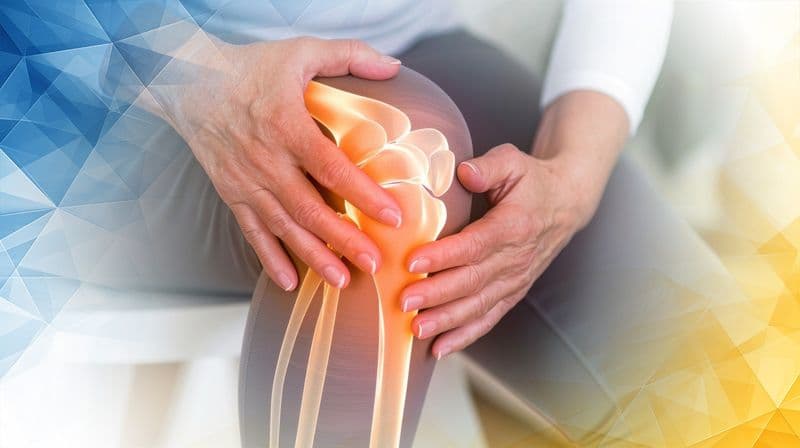
The knee is one of the body’s most hardworking and complex joints, making its cartilage essential for everyday movement. Acting as a cushion between bones, knee cartilage absorbs shock and reduces friction, allowing us to move comfortably and confidently. However, cartilage is notoriously bad at healing itself, so even minor damage can lead to ongoing pain and mobility issues. This is why understanding the microscopic structure of knee cartilage is so valuable—it opens doors to better treatments and true healing. In this article, we’ll explore what makes knee cartilage so remarkable at a micro level and highlight the exciting new therapies that promise to repair and restore joint health . By blending scientific insights and medical innovations, we aim to illuminate the promising future of knee care .
The Microarchitecture of Knee Cartilage
When you look at knee cartilage under a microscope, you see just how remarkable its structure is. The tissue consists mainly of chondrocytes—special cells surrounded by a gel-like extracellular matrix. This matrix is made up of collagen fibers, which provide strength; proteoglycans, which attract and retain water; and water itself. This combination gives cartilage the durability and elasticity needed to handle the pressures and movements our knees face every day.
Cartilage isn’t uniform—it’s made up of distinct layers, each with a specialized purpose. The superficial zone, or top layer, is tough and helps protect the deeper sections. Beneath it, the middle zone acts like a shock absorber, cushioning impacts. The deep zone anchors the cartilage firmly to the underlying bone, ensuring everything stays in place. The orientation of collagen fibers in each layer is carefully arranged, allowing the tissue to resist damage and wear over time.
The relationship between cartilage, surrounding soft tissue, and underlying bone is crucial for the knee’s overall function and vulnerability to injury. Anatomical research, such as that by LaPrade et al. (2007) and Hassebrock et al. (2020), emphasizes the complex interplay of the knee ’s structures, showing how the integration of ligaments, cartilage, and bone assures stability and function.
Recent studies also shine a light on the pericellular matrix—a thin layer around each chondrocyte —which helps cells sense mechanical forces and communicate with each other. This detailed level of understanding is shaping innovative therapies that better replicate cartilage’s natural environment, improving the odds of meaningful repair.
Free non-medical discussion
Not sure what to do next?
Information only · No medical advice or diagnosis.
Advancements in Regenerative Techniques and Treatments
For decades, treating damaged knee cartilage mostly involved managing pain or, in advanced cases, resorting to joint replacement . However, regenerative medicine is changing this picture, offering new hope for natural repair.
One of the promising treatments is autologous chondrocyte implantation (ACI). In this approach, doctors harvest healthy cartilage cells from the patient, grow them in the lab, and then implant them back into the damaged area. Stem cell therapies and the use of growth factors are also at the forefront, working to stimulate the body’s own healing process and encourage the formation of healthy new cartilage.
Innovative biomaterial scaffolds now provide a structural “blueprint” for regenerating cartilage . These three-dimensional frameworks mimic the tissue’s natural architecture, giving cells a supportive environment to grow and rebuild. The success of these regenerative treatments relies heavily on our improved understanding of cartilage’s microscopic design—helping restore not just the tissue, but its original strength and function.
Detailed anatomical insights, like those provided by LaPrade et al. (2007) and Hassebrock et al. (2020), continue to shape these therapies, ensuring that solutions go beyond simply filling defects to actually restoring the biomechanics of the knee .
As research pushes forward, the combination of biomaterials and biological factors holds great promise for improving treatment success and helping more people return to pain-free, active lives.

Clinical Implications and Future Directions
A deeper knowledge of cartilage microstructure has transformed how knee injuries are assessed and treated. Advanced imaging and diagnostic technologies now let doctors detect cartilage problems earlier and tailor treatment to each individual.
Surgical techniques have evolved too, favoring procedures that preserve as much healthy tissue as possible and encourage regeneration in damaged areas. Paired with regenerative medicine, these minimally invasive surgeries can mean faster recoveries and better outcomes.
An ingrained understanding of detailed knee anatomy is crucial for effective treatment. Research by Blackburn and Craig (1980), Hassebrock et al. (2020), and LaPrade et al. (2007) underscores how structural knowledge translates directly into surgical strategies, patient care, and better long-term joint health .
Looking to the future, ongoing research aims to refine regenerative techniques even further, with the ultimate goal of restoring full joint function and significantly reducing conditions like osteoarthritis . This ongoing translation of scientific knowledge into practical treatments exemplifies the incredible pace of today’s medical innovation.
Conclusion
Understanding the microstructure of knee cartilage is more than just a scientific pursuit—it’s the foundation for innovative treatments that truly improve lives. Its sophisticated, layered design gives cartilage the strength and flexibility to keep us moving, and new therapies are finally able to replicate and restore these qualities.
By linking research breakthroughs with modern medical technology, the outlook for patients with cartilage damage has never been brighter. These advances offer real hope for protecting and restoring knee health, helping people stay active and enjoy life for years to come.
As ongoing discoveries reveal even more about the secrets of knee cartilage , the possibilities for patient-centered care and recovery will only keep expanding.
References
Blackburn, T. A., & Craig, E. (1980). Knee Anatomy. Physical Therapy, 60(12), 1556-1560. https://doi.org/10.1093/ptj/60.12.1556
Hassebrock, J. D., Gulbrandsen, M. T., Asprey, W. L., Makovicka, J. L., & Chhabra, A. (2020). Knee Ligament Anatomy and Biomechanics. Sports Medicine and Arthroscopy Review, 28(3), 80-86.
LaPrade, R. F., Morgan, P. M., Wentorf, F. A., Johansen, S., & Engebretsen, L. (2007). The anatomy of the posterior aspect of the knee. The Journal of Bone and Joint Surgery (American), 89(4), 758-764. https://doi.org/10.2106/jbjs.f.00120
Legal & Medical Disclaimer
This article is written by an independent contributor and reflects their own views and experience, not necessarily those of London Cartilage Clinic. It is provided for general information and education only and does not constitute medical advice, diagnosis, or treatment.
Always seek personalised advice from a qualified healthcare professional before making decisions about your health. London Cartilage Clinic accepts no responsibility for errors, omissions, third-party content, or any loss, damage, or injury arising from reliance on this material.
If you believe this article contains inaccurate or infringing content, please contact us at [email protected].
London Cartilage Clinic
Modern treatments, designed for lasting knee outcomes
Every treatment plan is selected to help you return to the quality of life you deserve. Our team combines up-to-date techniques with consultant-led decision making across cartilage repair, regeneration and replacement.
What your journey can look like
Step 01
Consultant-Led Assessment
Symptoms, imaging and goals reviewed in one structured appointment.
Step 02
Personalised Treatment Plan
A clear route chosen from repair, regeneration or replacement options.
Step 03
Precision Delivery
Modern techniques and specialist equipment matched to your diagnosis.
Step 04
Long-Term Knee Health
Follow-up guidance focused on durable function and quality of life.
Will the Arthrosamid work for me
PAAG-8+ Questionnaire
A bright, structured entry point for patients exploring Arthrosamid. The questionnaire helps frame suitability, expectations, and 24-month clinical benefit discussion before a fuller consultant-led review.
Designed for shared decision-making. It does not replace specialist consultation, examination, imaging review, or formal medical advice.