








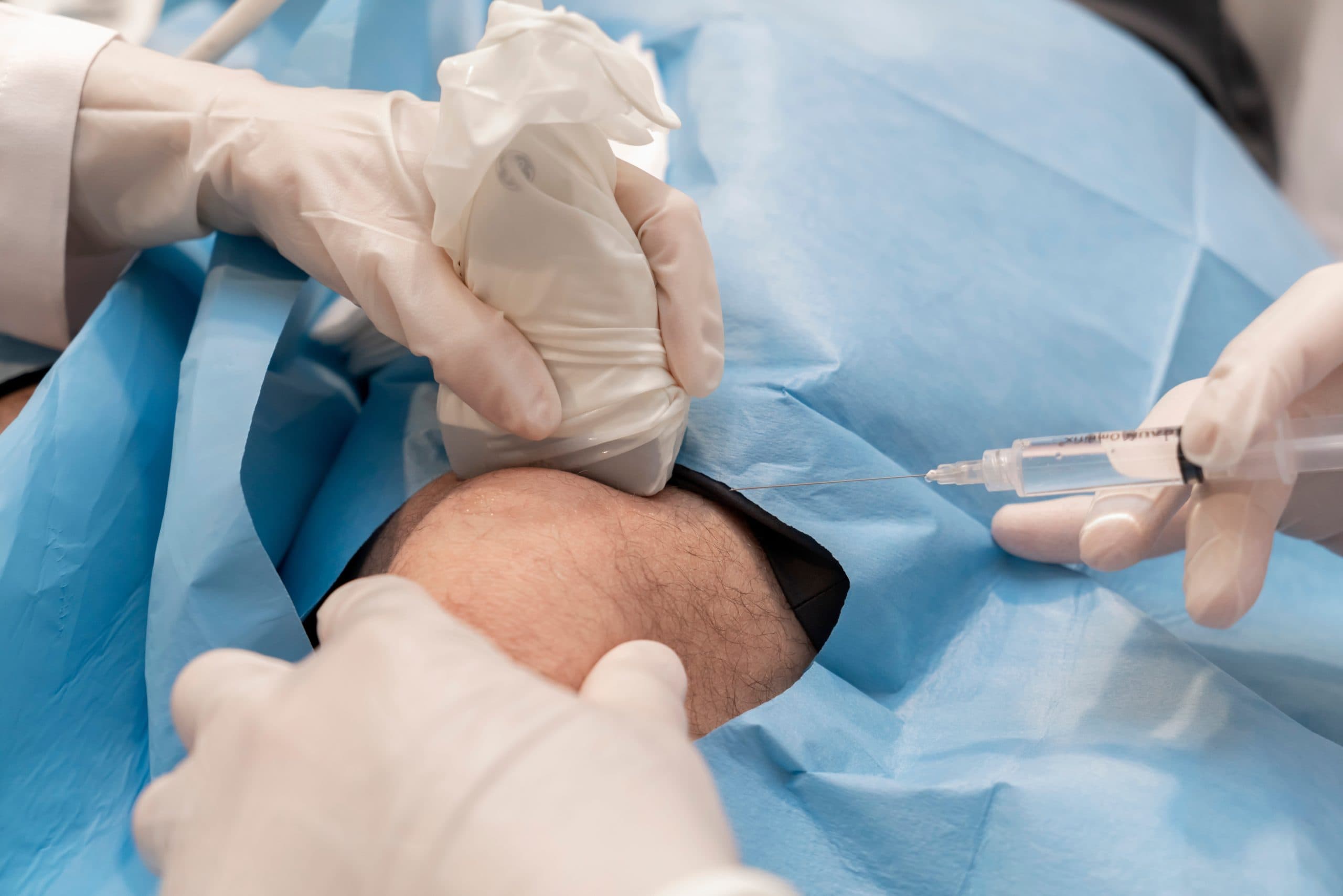




Sterile ultrasound-guided knee injection procedure

Durolane Injection

From £1,200
View Price List

Guide price only. Final cost is confirmed after assessment.

Durolane Injection is a groundbreaking treatment for knee osteoarthritis pain available at London Cartilage Clinic. This hyaluronic acid-based therapy provides an effective and long-lasting solution for those suffering from joint pain, helping to restore mobility and improve quality of life.

Doctor reviewing treatment plan on tablet

How Durolane works targeted viscosupplementation

Durolane is a stabilised hyaluronic acid injection that restores lubrication and shock absorption in osteoarthritic joints, especially the knee.

  • Designed to reduce pain, stiffness, and movement discomfort.
  • Single-injection format in many treatment pathways.
  • Can provide symptom improvement for several months in suitable patients.

It is commonly chosen when conservative care is insufficient but surgery is not yet indicated.

Why choose Durolane at London Cartilage Clinic

Durolane offers a practical balance of efficacy and convenience, particularly for patients who prefer a low-burden, non-surgical treatment plan.

  • Outpatient procedure with minimal downtime.
  • Ultrasound-guided precision for accurate intra-articular placement.
  • Integrated follow-up to evaluate response and next-step planning.

Our specialist team uses diagnosis-led injection planning so treatment fits your joint pathology, activity level, and long-term goals.

Doctor examining knee in white clinic room
consulting-in-office-with-pen

Frequently Asked Questions

What makes Durolane Injection different from other treatments?

Durolane’s unique formulation provides longer-lasting relief compared to some other hyaluronic acid treatments, making it a preferred choice for knee osteoarthritis management.

How soon can I expect to see results after the Durolane Injection?

Many patients experience improvement in pain and mobility within a few weeks after receiving the Durolane Injection.

Are there any side effects associated with Durolane Injection?

As with any medical procedure, there are potential side effects, but Durolane is generally well-tolerated. Our specialists will discuss any concerns you may have during your consultation.

How do I know if I have osteoarthritis?

The main symptoms of osteoarthritis are pain and stiffness that’s localised to certain joints. However, it can also include:

  • Tenderness.
  • More severe symptoms after periods of inactivity.
  • Crackling of grating sound when joints are moved.
  • Muscle weakness.
  • Limited range of movement.
  • Increased ‘knobbly’ appearance at the joints.

Does Durolane treatment hurt?

It’s normal for patients to experience slight discomfort during the injection, although this can simply be avoided through the use of a numbing agent or localised anaesthetic.

How long does Durolane last?

The exact duration of effectiveness of Durolane injections will depend on a range of factors, such as age, degree of injury, the joints affected, and underlying health conditions. A medical professional will be able to provide an accurate forecast during a consultation. However, Durolane is considered a long lasting treatment for relieving knee pain and restoring mobility relative to other options.

Still have more specific concerns?

Free Discovery Call

London Cartilage Clinic

Latest Insights

Clinical updates, cartilage treatment guidance, and recovery-focused articles from our specialist team.

ChondroFiller Injection for Knee Cartilage Defects
Knee Cartilage Repair
Eleanor Hayes

ChondroFiller Injection for Knee Cartilage Defects

ChondroFiller is an injectable collagen scaffold that recruits the body's own repair cells to fill focal knee cartilage defects; the single-stage outpatient procedure produces IKDC improvements of approximately 30 points with reoperation rates of 3–8%.

Who qualifies for ChondroFiller injection
ChondroFiller / Liquid Cartilage
Eleanor Hayes

Who qualifies for ChondroFiller injection

Candidacy for ChondroFiller injection rests on three interlocking criteria — cartilage-defect size, osteoarthritis grade, and joint-alignment stability — assessed together; meeting all three determines whether the injectable or surgical pathway applies.

When hip pain at night needs a specialist
Joint Conditions
Eleanor Hayes

When hip pain at night needs a specialist

Nocturnal hip pain signals a shift from activity-triggered to persistent inflammation — advancing disease where specialist assessment becomes necessary to preserve access to joint-preserving treatments before options close.

Privacy & Cookies Policy