







CartiHeal Agili-C · Treatment comparison
CartiHeal vs ACI cartilage implantation
CartiHeal treats cartilage and underlying bone in one operation with an off-the-shelf scaffold. Traditional ACI is a two-stage cultured-cell treatment centred on the cartilage surface. The deciding issue is the defect—not simply the number of operations.
 Reviewed byProfessor Paul Lee MBBch, FRCS (Tr & Orth), PhDCartilage and joint preservation expertise
Quick answer
CartiHeal uses an off-the-shelf biphasic scaffold in one operation. ACI harvests and expands the patient’s cartilage cells before a later implantation. There is no direct CartiHeal-versus-ACI trial establishing a universal winner.
Verified across three networks
Trusted by patients on Doctify, Google and Top Doctors
Core difference
CartiHeal is off the shelf; ACI grows the patient’s own cells
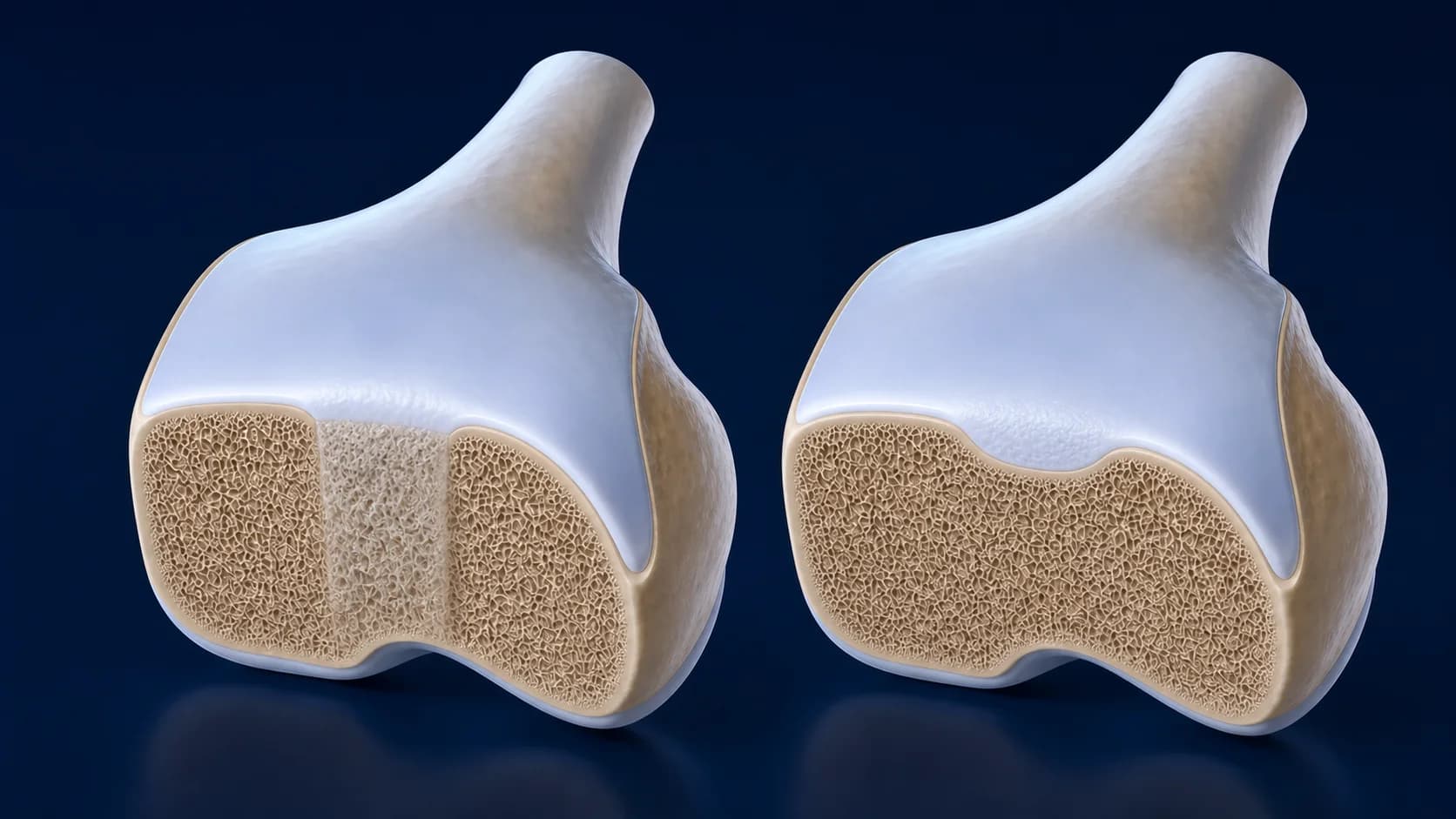
CartiHeal is a porous biphasic implant placed into a prepared cartilage-and-bone site in one operation. ACI starts with arthroscopic cartilage-cell harvest, followed by laboratory expansion and a later implantation operation.
The distinction is not simply one stage versus two. CartiHeal deliberately addresses an osteochondral unit, while ACI is a cell-based strategy centred on the cartilage surface and may need separate management of deeper bone pathology.
Treatment architecture
Ready-made scaffold or patient cell culture
CartiHeal
One-stage osteochondral scaffold
- Cell-free implant available off the shelf
- Prepared cylinder crosses cartilage and underlying bone
- No biopsy or laboratory expansion stage
ACI
Two-stage cultured-cell pathway
- Cartilage biopsy supplies the patient’s cells
- Laboratory expansion occurs between operations
- Implantation targets the cartilage-surface defect
Lesion-led choice
Four questions matter before stage count
How much bone is involved?
A deep osteochondral problem is not the same as a surface cartilage defect.
What is the defect geometry?
Size, shape, containment and location change the feasible repair.
What has already been done?
Previous marrow stimulation or repair can affect the tissue and next options.
Can the whole knee support it?
Alignment, stability, meniscus and arthritis still control the decision.
Which lesion fits?
Bone involvement, defect geometry and previous surgery can change the answer
CartiHeal may be relevant where a contained knee-joint surface lesion and its underlying bone can be prepared to accept the implant. ACI may suit selected larger chondral defects where cultured autologous cells and a staged pathway are proportionate.
Alignment, stability, meniscus function, osteoarthritis grade, prior marrow stimulation and rehabilitation capacity must be considered for either procedure. The device name should not lead the diagnosis.
Evidence boundaries
Separate evidence bases do not create a head-to-head winner
CartiHeal has randomised evidence against debridement or microfracture. That trial did not compare CartiHeal directly with ACI. ACI has a longer and different evidence history across varied techniques and patient groups.
A credible comparison therefore asks which population and lesion resembles the individual knee, rather than comparing headline outcome percentages from unrelated studies.
Evidence boundaries
Separate literatures answer different questions
CartiHeal evidence
Randomised against debridement or microfracture control.
ACI evidence
Covers varied cultured-cell techniques, lesions and patient groups.
No direct superiority claim
The pivotal CartiHeal trial did not include an ACI arm.
Compare the relevant patient
Study populations must resemble the lesion being considered.
Side-by-side
Off-the-shelf scaffold or cultured cells?

CartiHeal and ACI questions
Is CartiHeal a form of ACI?
No. CartiHeal is a cell-free osteochondral scaffold; ACI uses the patient’s cultured chondrocytes in a staged pathway.
Does CartiHeal avoid cell harvest?
Yes. It is off the shelf and does not require an initial cartilage biopsy for laboratory expansion.
Is CartiHeal proven better than ACI?
Not by the pivotal CartiHeal trial, which compared the implant with debridement or microfracture rather than ACI.
Which has the shorter treatment pathway?
CartiHeal is performed in one operation. ACI normally requires a harvest and later implantation, although rehabilitation remains substantial for both.
Still have more specific concerns?
Free Discovery CallOptions that our doctors may discuss include NanoACi, ChondroFiller, Mytocel MSK, joint replacement, established conservative care or surgery, depending on examination and imaging.
Match the repair strategy to the lesion
Professor Lee can compare CartiHeal, ACI and other cartilage-restoration routes against your imaging, goals and whole-knee mechanics.