








CartiHeal Agili-C · Treatment comparison
CartiHeal vs knee replacement
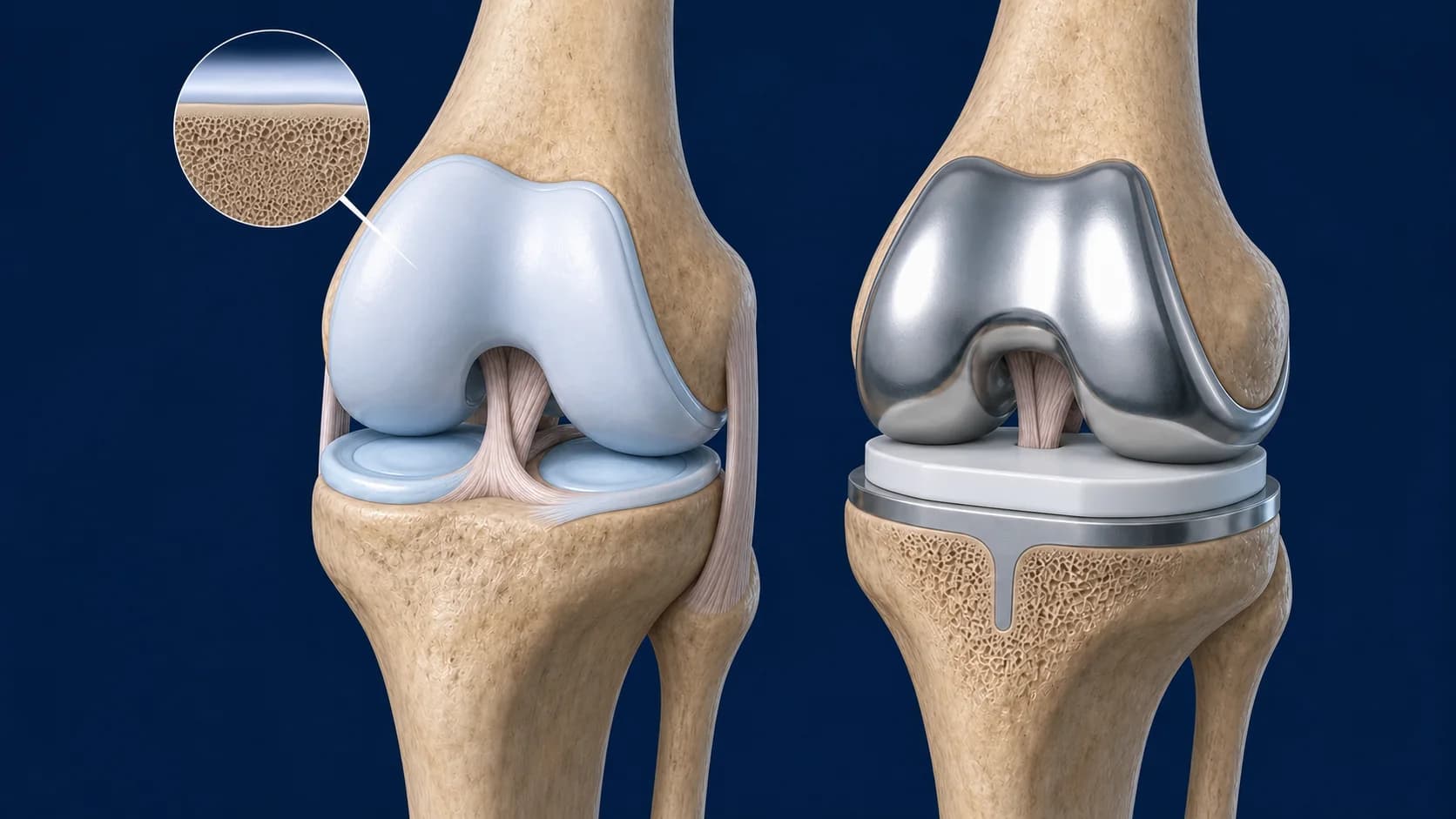
CartiHeal is joint-preserving surgery for selected focal cartilage or osteochondral defects. Knee replacement resurfaces broad worn joint surfaces with metal and polyethylene. These treatments usually serve different patterns and stages of disease.
 Reviewed byProfessor Paul Lee MBBch, FRCS (Tr & Orth), PhDCartilage and joint preservation expertise
Quick answer
CartiHeal preserves the knee while treating selected focal joint-surface lesions. Knee replacement resurfaces a compartment or the whole joint and is often more appropriate for diffuse severe arthritis. CartiHeal is not a universal way to avoid replacement.
Verified across three networks
Trusted by patients on Doctify, Google and Top Doctors
Different scale of treatment
CartiHeal repairs a selected site; replacement resurfaces a joint compartment or knee
CartiHeal is designed around one or more contained cartilage or osteochondral lesions within its indication. It preserves the native joint surfaces outside the treated site and relies on biological integration and remodelling.
Partial or total knee replacement removes and resurfaces worn joint surfaces using metal and polyethylene components. Replacement is a different operation for a different distribution and severity of disease.
Scale of surgery
Focal biological repair or prosthetic resurfacing
CartiHeal
Selected lesion repair
- Treats one or more focal osteochondral sites
- Keeps native surfaces outside the prepared area
- Relies on biological integration and remodelling
Knee replacement
Compartment or whole-joint resurfacing
- Removes worn joint surfaces at a broader scale
- Uses metal and polyethylene components
- Creates a mechanical prosthetic articulation
Preservation factors
When focal repair may remain credible
Localised disease
Symptoms plausibly relate to a contained, treatable joint-surface lesion.
Workable mechanics
Alignment, stability and meniscus can support the repair strategy.
Supportive bone
Bone quality and the surrounding joint allow focal reconstruction.
Realistic rehabilitation
Protected loading and long progression can be completed safely.
When preservation may remain credible
A focal lesion in a mechanically workable knee is not the same as end-stage arthritis
CartiHeal may enter the discussion when symptoms can reasonably be linked to treatable joint-surface lesions and alignment, stability, meniscus and surrounding joint condition can support a preservation plan.
Age alone does not decide the operation, but disease distribution, bone quality, expectations and capacity for protected rehabilitation all change the balance.
When replacement may be more honest
Diffuse severe arthritis can make focal repair disproportionate
CartiHeal is not indicated for severe Kellgren–Lawrence grade 4 osteoarthritis. Widespread bone-on-bone disease, major deformity, instability or multiple pain-generating compartments can make replacement the more reliable and proportionate route.
The CartiHeal trial reported fewer replacements or osteotomies than its control arm at five years. The trial measured outcomes over five years; how long an individual joint lasts depends on the patient and the lesion.
Replacement signals
When focal repair may be too small an answer
Diffuse joint-surface loss
Several broad worn areas may not be served by treating one focal site.
Severe KL4 arthritis
CartiHeal is not indicated for this end-stage radiographic pattern.
Major deformity or instability
Whole-joint mechanics may dominate more than one repairable defect.
Reliability over preservation
A replacement can be more proportionate when disease is broad and advanced.
Side-by-side
Focal biological repair or joint resurfacing?
CartiHeal and knee replacement questions
Can CartiHeal replace a knee replacement?
Not generally. CartiHeal treats selected cartilage and osteochondral lesions; replacement resurfaces diffuse or compartmental joint disease.
Can CartiHeal treat bone-on-bone arthritis?
It is not indicated for severe Kellgren–Lawrence grade 4 osteoarthritis. The extent and distribution of disease must be assessed rather than inferred from the phrase “bone on bone” alone.
Does CartiHeal guarantee I will avoid knee replacement?
No. It cannot guarantee that arthritis will not progress or that future replacement will be avoided.
Is age the deciding factor?
No. Lesion pattern, whole-joint disease, alignment, stability, function, goals, health and rehabilitation capacity all influence the choice.
Still have more specific concerns?
Free Discovery CallOptions that our doctors may discuss include NanoACi, ChondroFiller, Mytocel MSK, joint replacement, established conservative care or surgery, depending on examination and imaging.
Find out whether focal repair remains credible
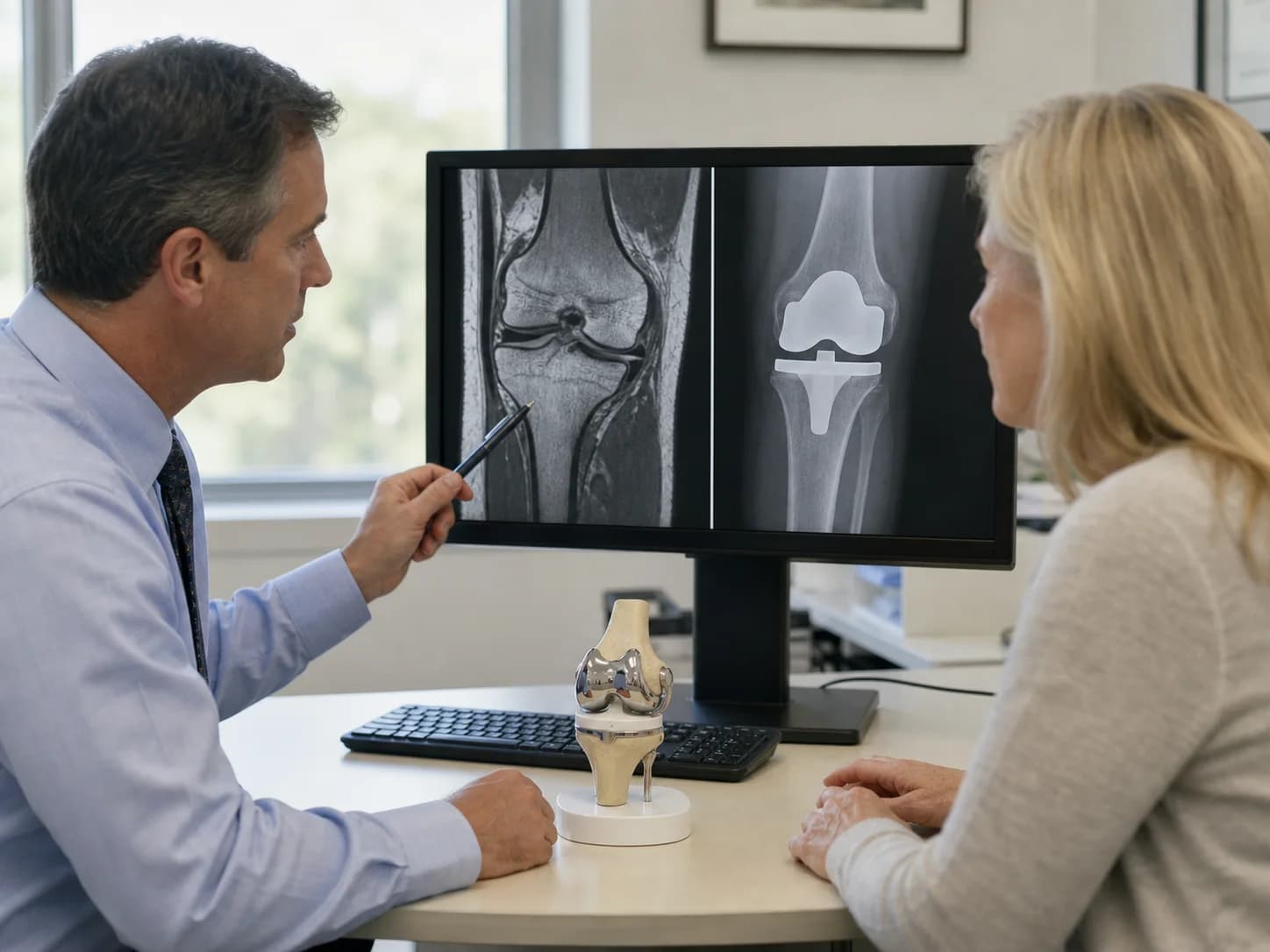
Professor Lee can review the disease pattern, mechanics and goals before comparing CartiHeal with partial or total knee replacement.