







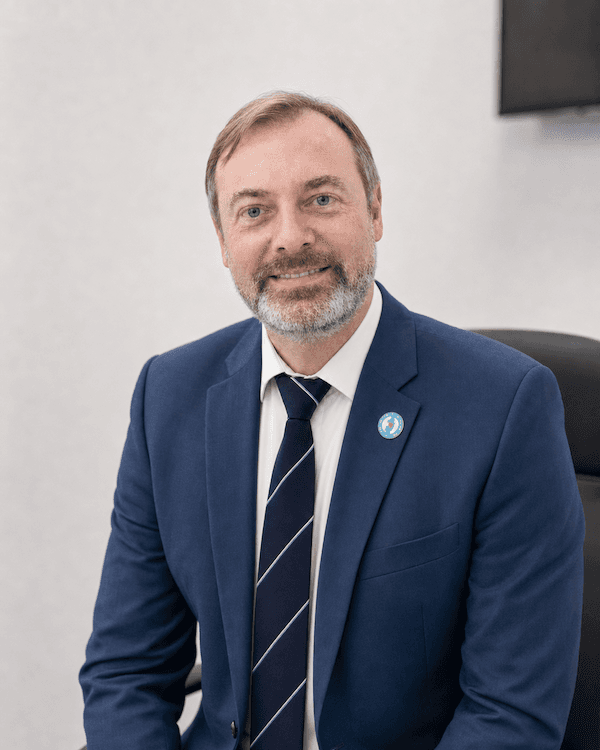
Leonidas Vachtsevanos
Mr Leonidas "Leo" Vachtsevanos based at New Hall Hospital, Salisbury's premier private healthcare facility, he offers a suite of specialised services that include minimally invasive arthroscopic knee surgeries, joint-preserving osteotomies, and a range of other state-of-the-art orthopaedic procedures.
His medical journey began at Cardiff University, where he earned his MBBCh in 2005. From there, his insatiable thirst for knowledge led him to further qualifications, culminating in a Fellowship in Trauma and Orthopaedics (FRCS T&O) in 2015. Not one to rest on his laurels, Mr Vachtsevanos enhanced his surgical proficiency through additional fellowships and a Postgraduate Diploma in Trauma Surgery from Swansea University in 2017.
In the clinical sphere, Mr Vachtsevanos has been the Orthopaedic Lead for Enhanced Recovery at Salisbury NHS Hospital since 2018. His role in developing and implementing day-case surgery protocols, in line with the latest evidence-based enhanced recovery techniques, has revolutionised patient care. This experience in public healthcare magnifies his credentials, particularly in his private practice at New Hall Hospital, ensuring patients receive unparalleled, personalised care.
He has a special interest in soft tissue reconstruction, joint preservation, and partial replacement surgery of the knee. His surgical portfolio ranges from sports injury arthroscopic cartilage and ligament reconstruction to complex joint replacement surgery, including deformity correction osteotomy surgery and patellar stabilisation and realignment procedures.
Whether it's the meticulous repair of a meniscal tear, or the complex architecture of a total knee or hip replacement, Mr Vachtsevanos deploys a patient-centred approach. Backed by a dedicated team of specialist therapists, he assures his patients of direct access to care following discharge, setting new standards in patient comfort and well-being. His relentless pursuit of excellence has not gone unnoticed. The National Joint Registry ranks him among the UK's best-performing surgeons for knee and hip replacement over the last decade. This national recognition adds another layer of trust and credibility to his already impressive CV.
It is this multifaceted expertise and commitment to patient care that makes Mr Vachtsevanos a sought-after name in the field of orthopaedic surgery. Whether consulting at Salisbury NHS Hospital or operating in the serene, state-of-the-art environment of New Hall Hospital, he exemplifies the epitome of orthopaedic excellence.


