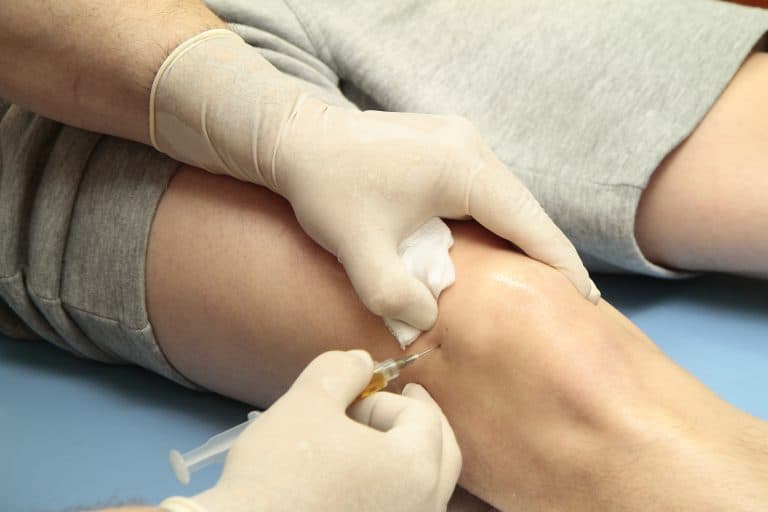



Supporting Early Hip Joint Recovery with ChondroFiller: A Focus on Labrum Tears and Early Arthritis
Hip pain is a common challenge for many active adults, often interfering with everyday life and activities. Two frequent culprits behind this discomfort are labrum tears and early arthritis—conditions that gradually wear down the joint and limit your ability to move freely. Early arthritis involves subtle changes in the cartilage, the smooth tissue that cushions your hip joint. Meanwhile, a labrum tear—a tear in the cartilage ring lining the hip socket—can destabilize the joint and accelerate further damage. Addressing these issues early is crucial to prevent long-term problems.
A new treatment called ChondroFiller Liquid is showing promise as a simple, minimally invasive way to support cartilage repair . Unlike complex surgeries, ChondroFiller uses a cell-free collagen scaffold to encourage your body’s own healing where cartilage has worn away. Recent studies suggest that this approach offers significant improvements in patients with early cartilage damage in various joints. This article takes a closer look at how ChondroFiller may benefit hip joints affected by labrum tears and early arthritis.
What Are Hip Labrum Tears and Early Arthritis?
The labrum is a ring of cartilage that hugs the rim of your hip socket. It helps keep your joint stable and acts as a shock absorber. When the labrum is torn—due to injury , repetitive motion, or a condition called impingement—you might notice sharp pain, a sense of instability, or clicking and locking in your hip. This type of damage disrupts the way the hip works and puts extra pressure on the cartilage , increasing the risk of further breakdown.
Early arthritis means the cartilage in your hip is beginning to wear thin. At this stage, subtle changes make the cartilage less healthy and more vulnerable. Doctors often use the International Cartilage Repair Society (ICRS) classification to assess the extent of cartilage damage. The encouraging news is that, with prompt treatment, these early changes can often be slowed or even partially reversed. Without intervention, though, labrum tears and early arthritis can progress, eventually leading to severe cartilage loss and osteoarthritis —much harder problems to treat. That’s why addressing these issues early makes a real difference for hip health .
How Does ChondroFiller Help Repair Hip Cartilage?
ChondroFiller Liquid is a gel made from type I collagen , a key protein that provides structure in your body. This “cell-free” material acts as a scaffold—supporting your body’s own repair cells but containing no living cells itself. Surgeons apply the gel directly to damaged areas during a hip arthroscopy , a minimally invasive procedure .
First, any loose or damaged cartilage is gently cleared out. After thoroughly drying the area, the surgeon injects the ChondroFiller gel into the defect. The gel solidifies quickly, forming a stable scaffold inside your joint. This structure encourages your repair cells—especially stem cells —to move in, multiply, and develop into new cartilage tissue.
Laboratory and animal studies have shown that ChondroFiller supports healthy cell growth and helps the body produce the proteins needed for cartilage repair . Recent technical advances also make it easier for surgeons to deliver the material exactly where it’s needed, improving treatment effectiveness.
While most of the evidence for ChondroFiller comes from knees and ankles, early studies using similar collagen scaffolds in the hip show that this approach is safe and may lead to significant improvements in hip function. These early results are encouraging for people addressing hip cartilage damage.
What Does the Clinical Evidence Say?
Most of our practical knowledge about ChondroFiller comes from its success treating cartilage injuries in the knee and ankle. Patients often report noticeable improvements, including about a 30% boost in knee function at one year and overall better quality of life. In follow-up studies, around 80% of people with small cartilage defects said their outcomes were good or very good, and few complications have been reported.
Although large, gold-standard clinical trials in the hip are still lacking, some studies suggest positive outcomes for people treated with similar collagen matrices for hip cartilage repair . Many patients had clear improvements in common hip scores, with nearly all meeting meaningful benchmarks for recovery.
Due to this promising data, some specialists are beginning to offer ChondroFiller “off-label” for hips—meaning the treatment is used in a way not yet fully approved but considered appropriate for select cases and closely monitored.
Free non-medical discussion
Not sure what to do next?
Information only · No medical advice or diagnosis.
Who Is Suitable for Treatment and What Does the Procedure Involve?
ChondroFiller is best suited for adults under 60 who have a small, clearly defined cartilage lesion—often related to a labrum tear—and no advanced arthritis. The treatment is done through keyhole ( arthroscopic ) surgery, typically under spinal or general anaesthesia.
After the damaged cartilage is removed and the area dried, the surgeon warms the ChondroFiller gel and injects it into the defect, where it hardens in place. This one-step approach is less invasive than traditional surgeries and gives your body the framework it needs to repair itself.
Recovery includes about six weeks of using crutches to protect the joint while it heals. A structured physiotherapy plan helps patients regain movement, build strength, and safely return to regular activities over the following months.

Expert Insight: Professor Paul Lee and the London Cartilage Clinic
Professor Paul Lee is an experienced orthopaedic surgeon specializing in cartilage repair and rehabilitation. At the London Cartilage Clinic , he leads a team offering advanced treatments like ChondroFiller in a professional and supportive setting. While Professor Lee did not invent ChondroFiller , his expertise ensures careful patient selection, thorough planning, and personalized recovery—all aimed at maximizing safety and the best possible outcomes for each patient.
Conclusion
ChondroFiller Liquid represents a new, minimally invasive option for repairing cartilage in the hip. While more research is needed to confirm its long-term benefits in this joint, early results—and experience in other joints—suggest it can support healing in carefully selected patients. For active adults with early hip labrum tears or arthritis, ChondroFiller may help preserve joint function and delay the need for more extensive procedures.
Always seek advice from a qualified healthcare professional to find the right treatment for your unique situation.
References
- De Lucas Villarrubi, J. C., Méndez Alonso, M. Á., Sanz Pérez, M. I., Trell Lesmes, F., & Panadero Tapia, A. (2021). Acellular Matrix-Induced Chondrogenesis Technique Improves the Results of Chondral Lesions Associated With Femoroacetabular Impingement. Arthroscopy. https://doi.org/10.1016/j.arthro.2021.08.022
- Perez-Carro, L., Mendoza Alejo, P. R., Gutierrez Castanedo, G., Menendez Solana, G., Fernandez Divar, J. A., Galindo Rubin, P., & Alfonso Fernandez, A. (2021). Hip Chondral Defects: Arthroscopic Treatment With the Needle and Curette Technique and ChondroFiller. Arthroscopy Techniques. https://doi.org/10.1016/j.eats.2021.03.011
- Breil-Wirth, A., von Engelhardt, L., Lobner, S., & Jerosch, J. (2016). Retrospective study of cell-free collagen matrix for cartilage repair. https://doi.org/10.3238/oup.2016.0515-0520
Frequently Asked Questions
- ChondroFiller offers a minimally invasive option for repairing hip cartilage, with support from Professor Paul Lee’s team. The London Cartilage Clinic provides tailored care, advanced technology, and expertise, aiming for improved joint function and a smooth recovery experience for patients.
- Professor Paul Lee is a leading orthopaedic surgeon with extensive experience in cartilage repair. At the London Cartilage Clinic, he ensures careful patient selection, individualised planning, and expert guidance throughout every stage of treatment and rehabilitation for optimal safety and outcomes.
- Adults under 60, with a well-defined cartilage lesion related to a labrum tear and without advanced arthritis, may be suitable. Assessment at the London Cartilage Clinic ensures individual evaluation to determine if ChondroFiller is the best option for your situation.
- Using a keyhole (arthroscopic) technique, Professor Lee and his team apply ChondroFiller directly to the defect. This creates a collagen scaffold, supporting your body’s natural cartilage repair in a less invasive, expertly managed setting at the London Cartilage Clinic.
- After treatment, patients use crutches for about six weeks and follow a structured physiotherapy plan. The London Cartilage Clinic provides comprehensive support, with Professor Lee overseeing personalised rehabilitation and monitoring progress to help patients regain movement and return to activity safely.
Legal & Medical Disclaimer
This article is written by an independent contributor and reflects their own views and experience, not necessarily those of London Cartilage Clinic. It is provided for general information and education only and does not constitute medical advice, diagnosis, or treatment.
Always seek personalised advice from a qualified healthcare professional before making decisions about your health. London Cartilage Clinic accepts no responsibility for errors, omissions, third-party content, or any loss, damage, or injury arising from reliance on this material.
If you believe this article contains inaccurate or infringing content, please contact us at [email protected].
London Cartilage Clinic
Modern treatments, designed for lasting knee outcomes
Every treatment plan is selected to help you return to the quality of life you deserve. Our team combines up-to-date techniques with consultant-led decision making across cartilage repair, regeneration and replacement.
What your journey can look like
Step 01
Consultant-Led Assessment
Symptoms, imaging and goals reviewed in one structured appointment.
Step 02
Personalised Treatment Plan
A clear route chosen from repair, regeneration or replacement options.
Step 03
Precision Delivery
Modern techniques and specialist equipment matched to your diagnosis.
Step 04
Long-Term Knee Health
Follow-up guidance focused on durable function and quality of life.
Will the Arthrosamid work for me
PAAG-8+ Questionnaire
A bright, structured entry point for patients exploring Arthrosamid. The questionnaire helps frame suitability, expectations, and 24-month clinical benefit discussion before a fuller consultant-led review.
Designed for shared decision-making. It does not replace specialist consultation, examination, imaging review, or formal medical advice.