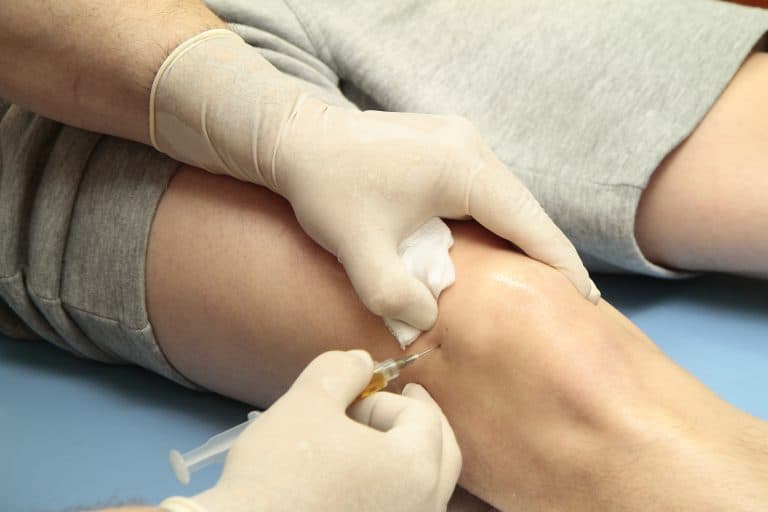



ChondroFiller: A Minimally Invasive Breakthrough for Repairing Focal Cartilage Defects
Introduction
Every year, thousands of people struggle with focal cartilage defects—small, localised areas of cartilage damage—which can severely limit joint movement and diminish quality of life. These injuries bring pain and stiffness, making daily activities challenging, particularly for younger and more active individuals. Fortunately, medical advances have led to minimally invasive, biologically active treatments that stimulate the body’s natural healing abilities. Professor Paul Lee, a highly regarded expert in orthopaedics and rehabilitation, leads the London Cartilage Clinic, where patients benefit from professional, dedicated care. In this article, we explore why ChondroFiller —a new cell-free collagen treatment—represents a significant step forward in supporting cartilage healing .
Traditional Approaches and Their Limitations
Treatments for focal cartilage defects include microfracturing, abrasion arthroplasty, osteochondral transplantation, and autologous chondrocyte implantation (ACI). Microfracturing involves making tiny holes in the bone beneath the cartilage to trigger repair, but often results in immature scar tissue that’s less durable than healthy cartilage . ACI requires two surgeries—one to harvest cartilage cells from the patient, another to implant lab-grown cells—which adds complexity, cost, and potential donor site problems. Clearly, there is a strong need for a simpler, effective, one-step treatment that avoids the challenges of cell culture and extensive surgery. In modern cartilage repair , it’s essential that any new material closely resembles the natural cartilage it is replacing, supporting both function and durability.
How ChondroFiller Works: A Cell-Free Collagen Matrix
ChondroFiller is an innovative solution in the form of a two-part gel made from type I collagen, a protein naturally found in connective tissues. During a minimally invasive procedure—either using a small camera ( arthroscopy ) or a minor surgical incision—the gel is injected directly into the prepared cartilage defect. The gel quickly forms a solid scaffold inside the damaged area. While ChondroFiller does not contain any cells itself, this scaffold welcomes stem cells from the patient’s surrounding tissue. These stem cells migrate in, settle, and mature into new cartilage cells, gradually rebuilding healthy tissue. Laboratory and animal studies show that this collagen scaffold is safe, effectively attracts the body’s own repair cells, and supports the integration and growth of cartilage -like tissue. The technique is simple, reproducible, and comparatively affordable, making it accessible to more patients.
Free non-medical discussion
Not sure what to do next?
Information only · No medical advice or diagnosis.
Clinical Evidence: Safety and Efficacy
Research shows ChondroFiller delivers impressive outcomes. In one mid-term study, 64 patients with knee or ankle cartilage defects experienced marked improvement: their average knee function scores increased from 47.6 before treatment to 80.0 three years later. A major randomised trial comparing ChondroFiller to traditional microfracture found that ChondroFiller patients had better and faster improvements at 3, 6, and 12 months. MRI scans confirmed that the implant integrated well with native cartilage. Real-world results showed high satisfaction, with about 80% of patients reporting good to very good outcomes and saying they would choose the operation again—plus, there were no complications or reports of worsening symptoms. Innovations like the needle and curette technique have made delivery of the product even more precise and efficient, further optimising results. Importantly, the unique mechanical properties of ChondroFiller mean it adapts well to life inside a joint, supporting lasting repair.

Patient Selection and Rehabilitation Protocol
ChondroFiller is ideal for adults with focal cartilage defects measuring between 6 and 12 cm² who have healthy, firm-edged cartilage surrounding the damage. It is not recommended for people with advanced osteoarthritis , inflammatory joint diseases, joint stiffness (arthrofibrosis), or autoimmune conditions. After treatment, patients rest the joint for 48 hours, followed by about six weeks of limited weight-bearing (around 20 kilograms), using crutches for support. Gradual increases in movement and strengthening exercises help restore function. At the London Cartilage Clinic, a personalised physiotherapy program and close monitoring help each patient return to their best as smoothly as possible. Success depends on factors like accurate placement of the implant and ongoing guidance throughout rehabilitation—details that are prioritised in expert clinics.
Conclusion and Disclaimer
ChondroFiller is an exciting development in cartilage repair —a single-step, minimally invasive procedure that activates the body’s own repair mechanisms without the need for lab-grown cells or multiple surgeries. Under the guidance of Professor Paul Lee and the expert team at the London Cartilage Clinic , patients are supported every step of the way. While long-term studies are ongoing, current evidence shows that ChondroFiller is safe, effective, and highly satisfying for most patients. For individual medical advice and to determine if ChondroFiller is right for you, please consult a qualified healthcare professional.
This article aims to demystify ChondroFiller by blending scientific insight with straightforward explanations—helping you understand how this new treatment works and why it matters.
References
Breil-Wirth, A., von Engelhardt, L., Lobner, S., & Jerosch, J. (2016). Retrospective study of cell-free collagen matrix for cartilage repair. , , 515-520. https://doi.org/10.3238/oup.2016.0515-0520
Perez-Carro, L., Mendoza Alejo, P. R., Gutierrez Castanedo, G., Menendez Solana, G., Fernandez Divar, J. A., Galindo Rubin, P., & Alfonso Fernandez, A. (2021). Hip Chondral Defects: Arthroscopic Treatment With the Needle and Curette Technique and ChondroFiller. , . https://doi.org/10.1016/j.eats.2021.03.011
Weizel, A., Distler, T., Schneidereit, D., & Friedrich, O. (2020). Complex mechanical behavior of human articular cartilage and hydrogels for cartilage repair. Acta Biomaterialia, , . https://doi.org/10.1016/j.actbio.2020.10.025
Frequently Asked Questions
- London Cartilage Clinic offers advanced, minimally invasive procedures guided by Professor Paul Lee, a leading expert in orthopaedics. Patients receive professional, dedicated care with personalised rehabilitation plans, ensuring optimal outcomes and comprehensive support throughout their treatment and recovery process.
- Professor Paul Lee is renowned for his expertise in orthopaedics and rehabilitation. His clinical knowledge and innovative approach allow patients to access the latest cartilage treatments, such as ChondroFiller, ensuring accurate implant placement and meticulous, monitored rehabilitation for the best possible functional recovery.
- ChondroFiller is a cell-free, collagen-based gel that requires only a single, minimally invasive procedure. This approach avoids the need for multiple surgeries or lab-grown cells, offering patients simpler procedures, quicker rehabilitation, and highly satisfying results under the care of experienced specialists like Professor Lee.
- ChondroFiller works best for adults with localised cartilage defects and healthy surrounding cartilage. Patients benefit from thorough assessment, precise treatment, and personalised rehabilitation by Professor Lee’s expert team, who ensure careful selection to maximise the likelihood of positive outcomes.
- After ChondroFiller treatment, patients receive a tailored physiotherapy programme and careful monitoring. The clinic prioritises gradual rehabilitation and ongoing expert support, enabling patients to rebuild strength, restore joint function, and achieve the best results possible in a professional clinical environment.
Legal & Medical Disclaimer
This article is written by an independent contributor and reflects their own views and experience, not necessarily those of London Cartilage Clinic. It is provided for general information and education only and does not constitute medical advice, diagnosis, or treatment.
Always seek personalised advice from a qualified healthcare professional before making decisions about your health. London Cartilage Clinic accepts no responsibility for errors, omissions, third-party content, or any loss, damage, or injury arising from reliance on this material.
If you believe this article contains inaccurate or infringing content, please contact us at [email protected].
London Cartilage Clinic
Modern treatments, designed for lasting knee outcomes
Every treatment plan is selected to help you return to the quality of life you deserve. Our team combines up-to-date techniques with consultant-led decision making across cartilage repair, regeneration and replacement.
What your journey can look like
Step 01
Consultant-Led Assessment
Symptoms, imaging and goals reviewed in one structured appointment.
Step 02
Personalised Treatment Plan
A clear route chosen from repair, regeneration or replacement options.
Step 03
Precision Delivery
Modern techniques and specialist equipment matched to your diagnosis.
Step 04
Long-Term Knee Health
Follow-up guidance focused on durable function and quality of life.
Will the Arthrosamid work for me
PAAG-8+ Questionnaire
A bright, structured entry point for patients exploring Arthrosamid. The questionnaire helps frame suitability, expectations, and 24-month clinical benefit discussion before a fuller consultant-led review.
Designed for shared decision-making. It does not replace specialist consultation, examination, imaging review, or formal medical advice.