 Cartilage
 Knees
Knees Hip
Hip Shoulder
Knee Cartilage and Its Capacity for Repair
23/02/26


Cartilage damage and degeneration are common problems that can greatly affect mobility and quality of life, causing pain and stiffness in affected joints. Traditional treatments—such as surgery or simple injection therapies—sometimes fall short in fully restoring the damaged cartilage or joint function. Recently, however, exciting new science-driven technologies have begun to complement these approaches. Among these innovations, bioactive hydrogel therapies have emerged as a promising way to encourage the body’s own cartilage to regenerate. This article explores the latest research, advances in injectable cartilage gels, clinical findings, and what the future might hold. Leading the way in this field is Professor Paul Lee and the London Cartilage Clinic, combining professional expertise with a strong focus on patient care.
Hydrogels are special gel-like materials made up mostly of water held within a network of polymers. Their structure closely resembles the natural environment of cartilage, which provides a supportive “scaffold” where new cartilage cells can attach, grow, and repair damage. More than just passive fillers, bioactive hydrogels can release substances that encourage healing, such as growth factors that stimulate cartilage cell activity. This unique combination allows hydrogels to mimic the complex cartilage matrix better than many traditional treatments.
Compared with conventional methods like microfracture surgery—which involves creating tiny fractures to stimulate cartilage growth—or standard injection treatments that simply lubricate joints, hydrogel-based therapies offer several advantages. This cutting-edge cartilage regeneration technology helps the new tissue integrate more seamlessly with existing cartilage and can better withstand joint movements. These new cartilage repair methods mark an important step forward in regenerative medicine, aiming to restore not just relief from symptoms, but the structure and function of cartilage itself.
One exciting development is the use of injectable hydrogels such as ChondroFiller liquid, a cell-free collagen-based gel designed to fill damaged areas and promote cartilage repair. Studies have shown that “the ChondroFiller liquid method is a safe and simple workable method,” with MRI scans confirming “a good immediate filling of all treated defects” (Schneider, 2016).
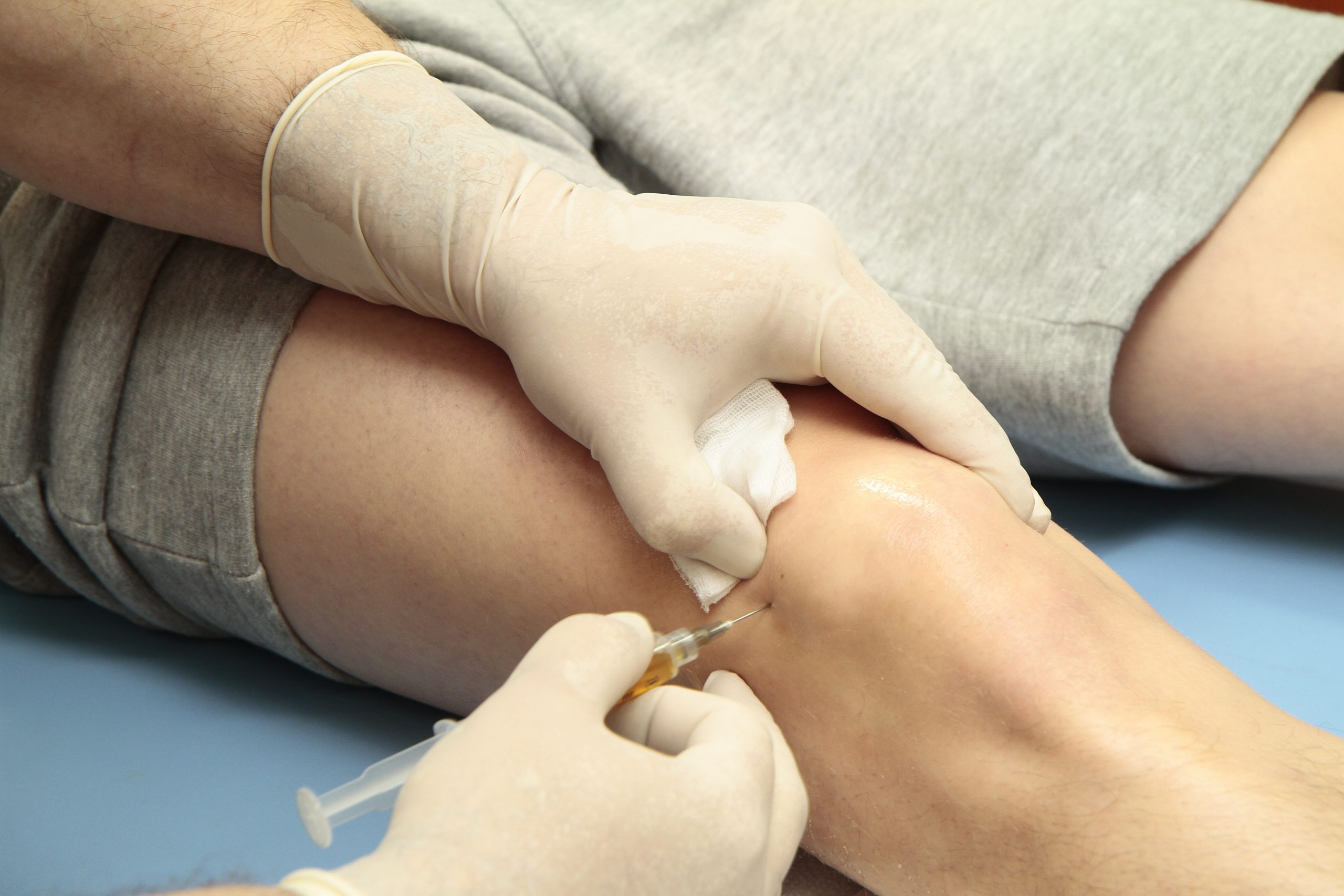
Delivering these gels effectively, especially in tricky joints like the hip, has also improved. For instance, a novel “needle and curette” technique allows surgeons to position the gel precisely where it’s needed, improving treatment efficiency during arthroscopic procedures (Perez-Carro et al., 2021).
The applications of these injectable hydrogels continue to grow. A recent study looking at thumb base osteoarthritis—the painful wear and tear affecting thumb joints—reported that treatment with ChondroFiller Liquid® “led to an improvement in pain symptoms, along with increased grip strength and pincer ability, as confirmed by clinical tests” (Corain et al., 2023). MRI images further revealed positive changes in joint condition, including decreased bone swelling and reduced fluid build-up around the joint.
Besides cell-free gels, there are also adhesive hydrogels that stick better within the joint, and piezoelectric gels that convert mechanical movements into signals encouraging new tissue growth. Many of these gels include growth factors or peptides that further boost the healing environment.
Together, these hydrogel therapies combine multiple healing mechanisms—structural support, chemical stimulation, and bioactivity—in one minimally invasive injection. While some products have been approved for clinical use, many remain under investigation by researchers. As one expert review puts it, “all defects could be filled successfully,” but emphasises that “further randomised studies with larger patient groups and longer follow-up are necessary to fully understand the benefits” (Schneider, 2016). This cautious approach ensures patients and clinicians alike maintain realistic expectations.
So far, studies paint a promising picture: bioactive hydrogel injections are generally safe and show encouraging results in improving cartilage quality and joint function. For example, MRIs reveal that these implants “integrate perfectly with adjacent cartilage from the start and mature impressively over time” (Schneider, 2016).
The practical side also looks favourable. Procedures tend to be less invasive than traditional surgery, often done under image guidance with faster recovery and fewer complications. The “needle and curette” method, in particular, represents a “simple, inexpensive, and reproducible technique” to deliver the gel even in difficult-to-reach joints, broadening patient access (Perez-Carro et al., 2021).
Expanding beyond knees and hips, injections of ChondroFiller Liquid® are helping hand osteoarthritis patients too. As Corain and colleagues explain, this gel “forms a protective layer around cartilage damage while stimulating chondrocyte growth, encouraging cartilage regeneration” (Corain et al., 2023). Patients have experienced less pain and improved hand strength, making daily tasks easier.
Overall, patients with mild to moderate cartilage damage, who are not yet candidates for joint replacement, may especially benefit from these treatments. Professor Paul Lee and the London Cartilage Clinic bring expert judgement to carefully select suitable patients and tailor treatments to individual needs, ensuring safety and the best outcomes possible.
The future for hydrogel-assisted cartilage repair looks bright. Research is focusing on personalising treatments according to individual biology, improving the bioactivity of gels, and combining hydrogels with stem cells or other regenerative therapies. Yet, challenges remain — such as collecting long-term safety and effectiveness data, navigating regulation, and making these treatments widely available.
Success will rely on close collaboration between scientists, clinicians, and regulatory bodies to translate promising laboratory advances into everyday clinical practice.
Bioactive hydrogel therapies represent an exciting and valuable addition to the growing arsenal of cartilage repair options. While they offer clear benefits over older methods, expert guidance is vital to use them safely and effectively. Professor Paul Lee and the London Cartilage Clinic exemplify such professional, patient-centred care in this evolving field. For personalised medical advice, always consult a qualified healthcare professional.
Corain, M., Zanotti, F., Giardini, M., Gasperotti, L., Invernizzi, E., Biasi, V., & Lavagnolo, U. (2023). The use of an acellular collagen matrix ChondroFiller® Liquid for trapeziometacarpal osteoarthritis.
Perez-Carro, L., Rosi Mendoza Alejo, P., Gutierrez Castanedo, G., Menendez Solana, G., Fernandez Divar, J. A., Galindo Rubin, P., & Alfonso Fernandez, A. (2021). Hip chondral defects: Arthroscopic treatment with the needle and curette technique and ChondroFiller. Elsevier. https://doi.org/10.1016/j.eats.2021.03.011
Schneider, U. (2016). Controlled, randomized multicenter study to compare compatibility and safety of ChondroFiller liquid (cell free 2-component collagen gel) with microfracturing of patients with focal cartilage defects of the knee joint.
Bioactive hydrogel therapies support natural cartilage regeneration, offering advanced healing mechanisms beyond traditional surgery or injections. The London Cartilage Clinic, led by Professor Paul Lee, provides cutting-edge options tailored to patients seeking alternatives to conventional treatments for improved joint health.
Professor Paul Lee is a recognised Cartilage Expert, Surgical Ambassador, and Advisor to the Royal College of Surgeons of Edinburgh. His expertise, combined with the innovative approach of the London Cartilage Clinic, ensures patients receive advanced, personalised cartilage regeneration strategies and exceptional patient-centred care.
Current research indicates injectable hydrogels such as ChondroFiller are generally safe, showing promising improvements in cartilage quality and joint function. At London Cartilage Clinic, Professor Lee selects the most suitable patients for these therapies, using clinical evidence to guide treatment decisions for optimal outcomes.
Hydrogel therapies can be applied to knees, hips, and hands, expanding possibilities for patients with different types of cartilage damage. London Cartilage Clinic’s precise treatment methods, delivered by Professor Lee, reach even challenging joints, increasing access to state-of-the-art cartilage repair across multiple areas.
Expert evaluation ensures that cartilage therapies match individual patient needs and safety criteria. Professor Paul Lee’s specialist judgement at London Cartilage Clinic guarantees each patient receives appropriate, science-driven care, maximising benefits from the latest regenerative innovations while maintaining the highest standards of medical oversight.
All our treatments are selected to help patients achieve the best possible outcomes and return to the quality of life they deserve. Get in touch if you have any questions.
At London Cartilage Clinic, we are constantly staying up-to-date on the latest treatment options for knee injuries and ongoing knee health issues. As a result, our patients have access to the best equipment, techniques, and expertise in the field, whether it’s for cartilage repair, regeneration, or replacement.
For the best in patient care and cartilage knowledge, contact London Cartilage Clinic today.
At London Cartilage Clinic, our team has spent years gaining an in-depth understanding of human biology and the skills necessary to provide a wide range of cartilage treatments. It’s our mission to administer comprehensive care through innovative solutions targeted at key areas, including cartilage injuries. During an initial consultation, one of our medical professionals will establish which path forward is best for you.
Contact us if you have any questions about the various treatment methods on offer.
Legal & Medical Disclaimer
This article is written by an independent contributor and reflects their own views and experience, not necessarily those of londoncartilage.com. It is provided for general information and education only and does not constitute medical advice, diagnosis, or treatment.
Always seek personalised advice from a qualified healthcare professional before making decisions about your health. londoncartilage.com accepts no responsibility for errors, omissions, third-party content, or any loss, damage, or injury arising from reliance on this material. If you believe this article contains inaccurate or infringing content, please contact us at [email protected].